Simulations
Explore physics concepts through interactive simulations.
54 simulations
Simple Oscillating Pendulum
Explore simple harmonic motion of an ideal pendulum: period, amplitude, and the restoring force as the bob swings.
Pendulums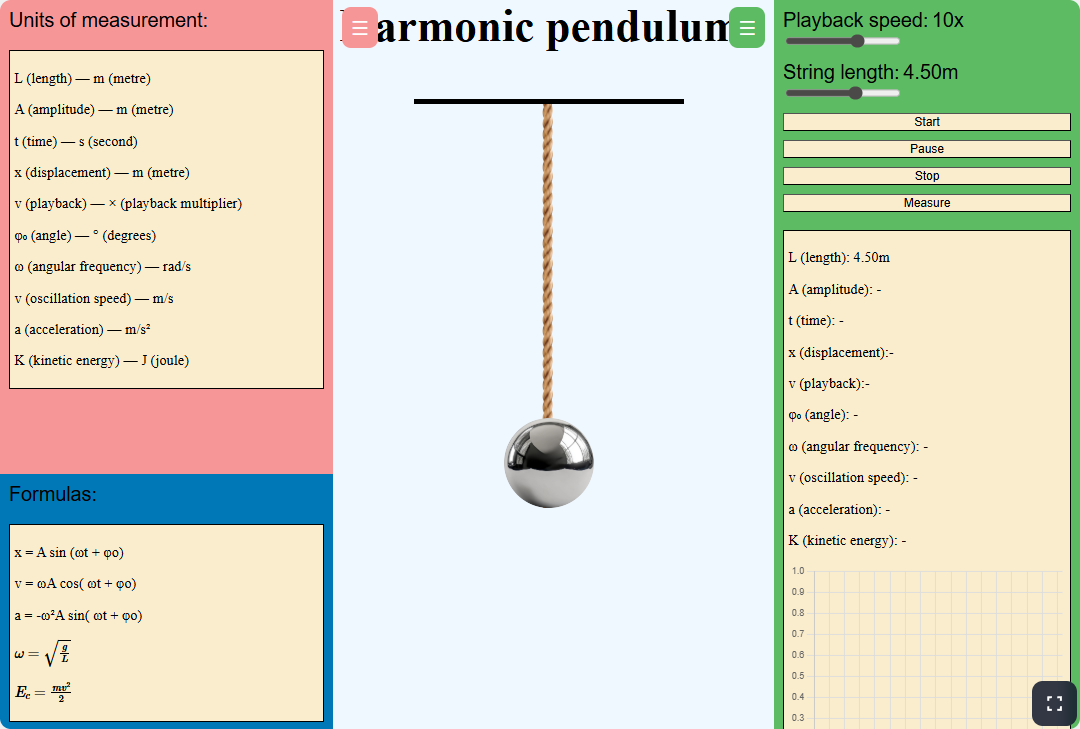
Damped Oscillating Pendulum
See how viscous friction damps oscillatory motion and how amplitude decays over time.
Pendulums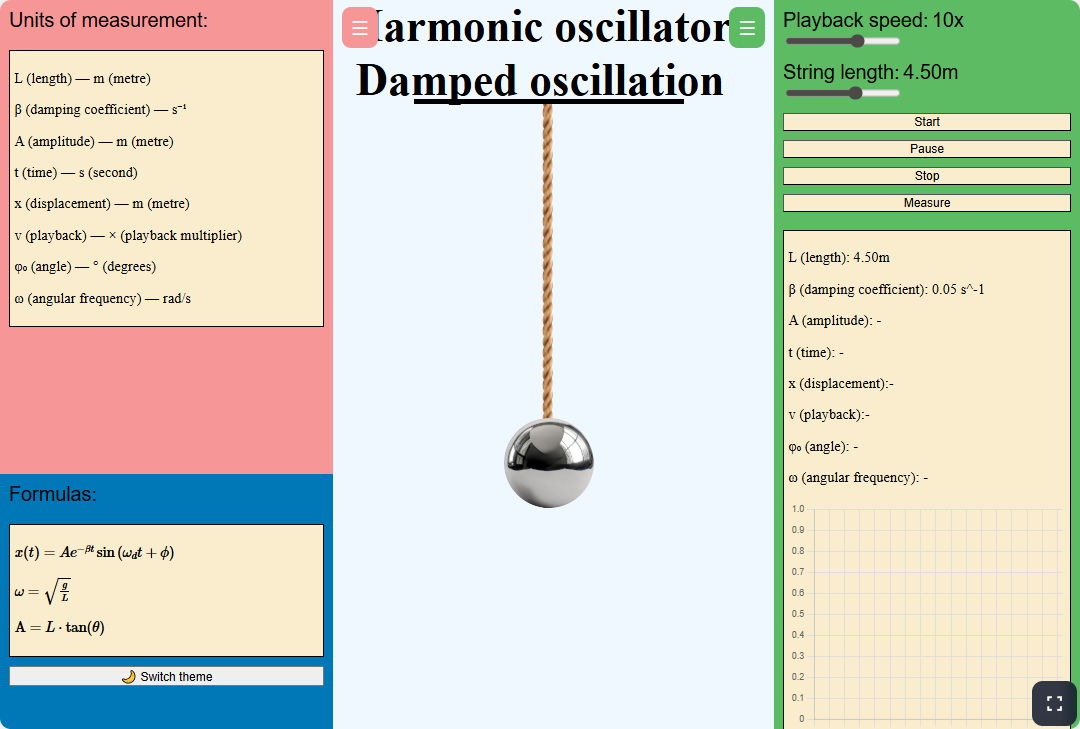
Nonlinear Pendulum
Explore large-amplitude pendulum motion where the small-angle approximation no longer holds and the period depends on amplitude.
Pendulums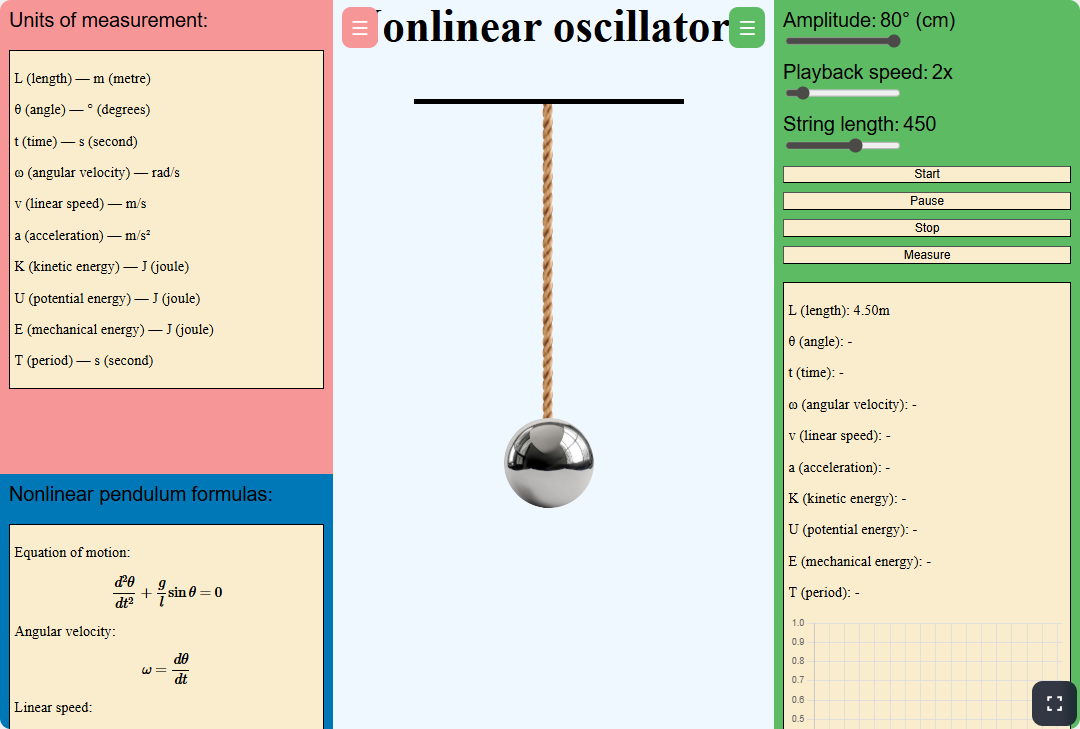
Water Waves
Simulate the propagation of surface waves in water, including interference patterns.
Waves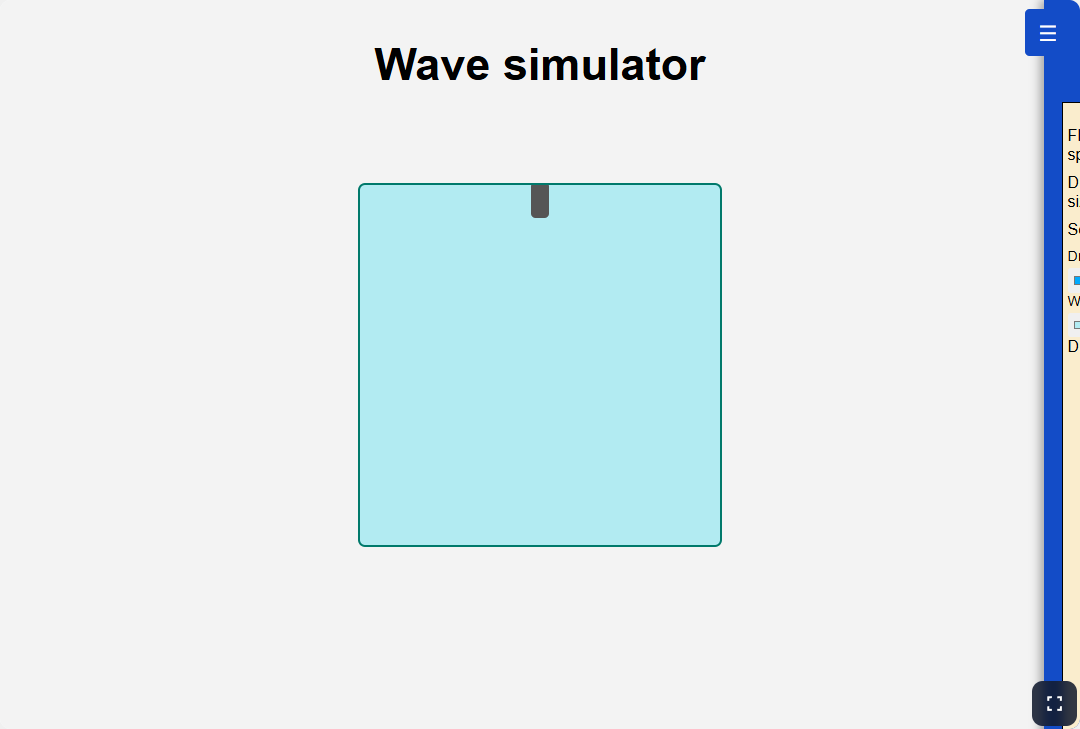
Lissajous Figures
Generate Lissajous figures by combining two perpendicular oscillations with adjustable frequencies and phases.
Waves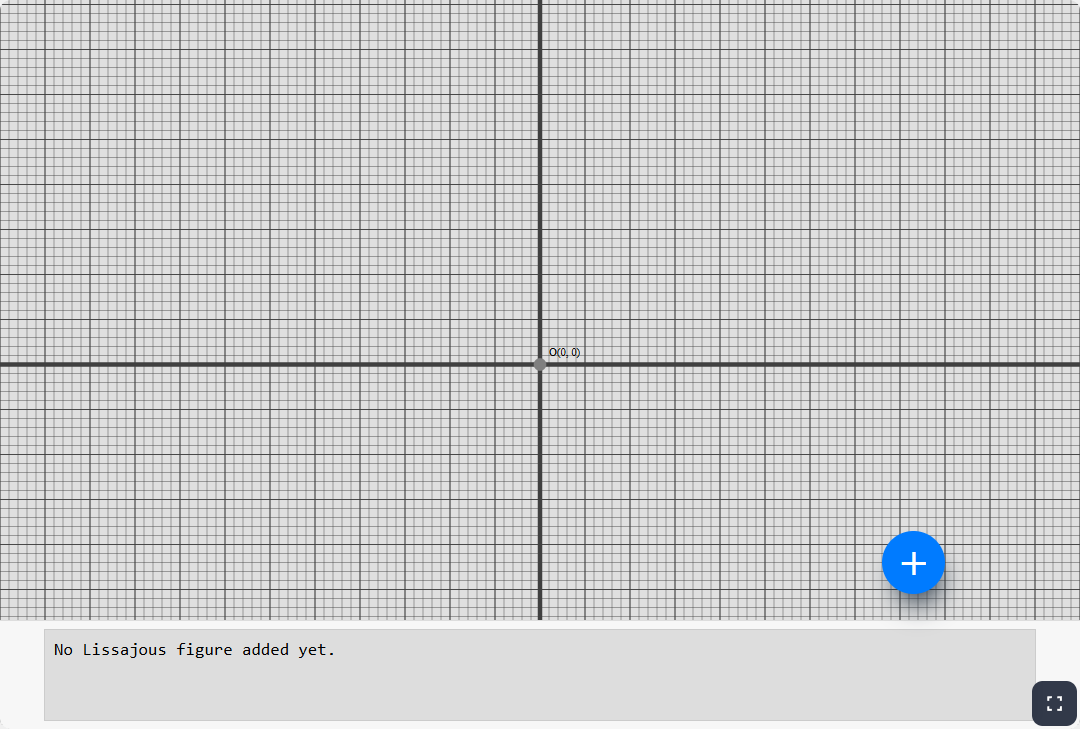
Pendulum Graphs
Plot position, velocity, and acceleration in time for different types of pendulums.
Graphs
Function Graphs
Plot mathematical functions and explore their shape, period, and amplitude interactively.
Graphs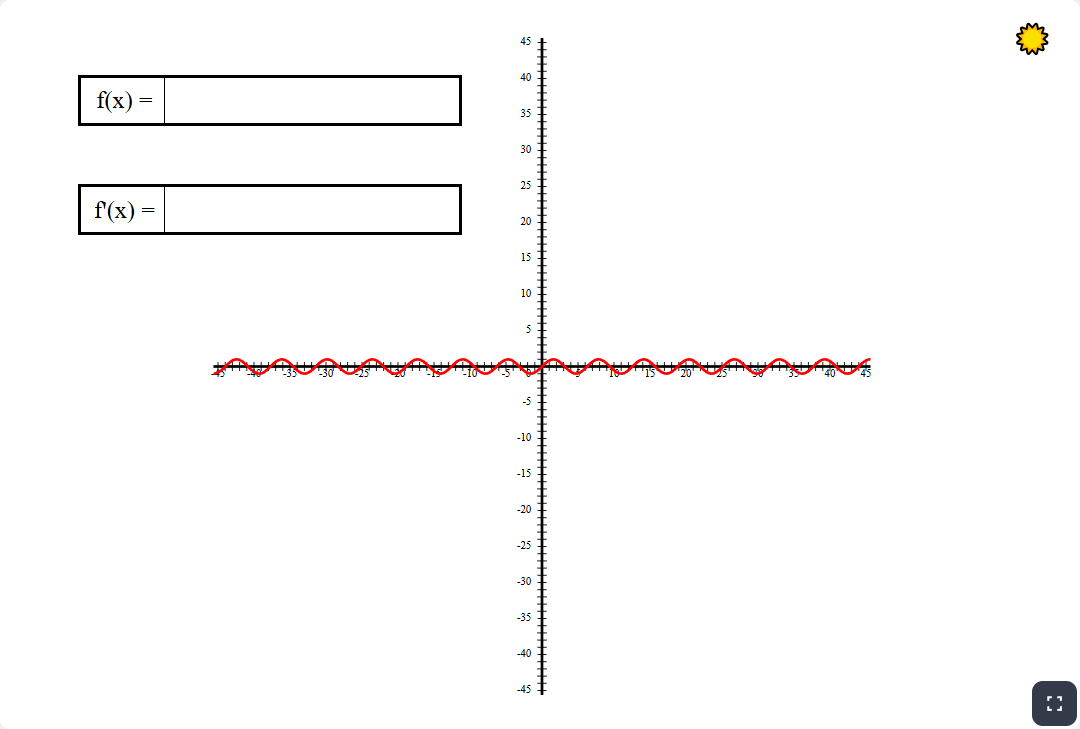
Basic Graphs
Plot simple sinusoidal and polynomial functions and compare how amplitude, period, and shape change.
Graphs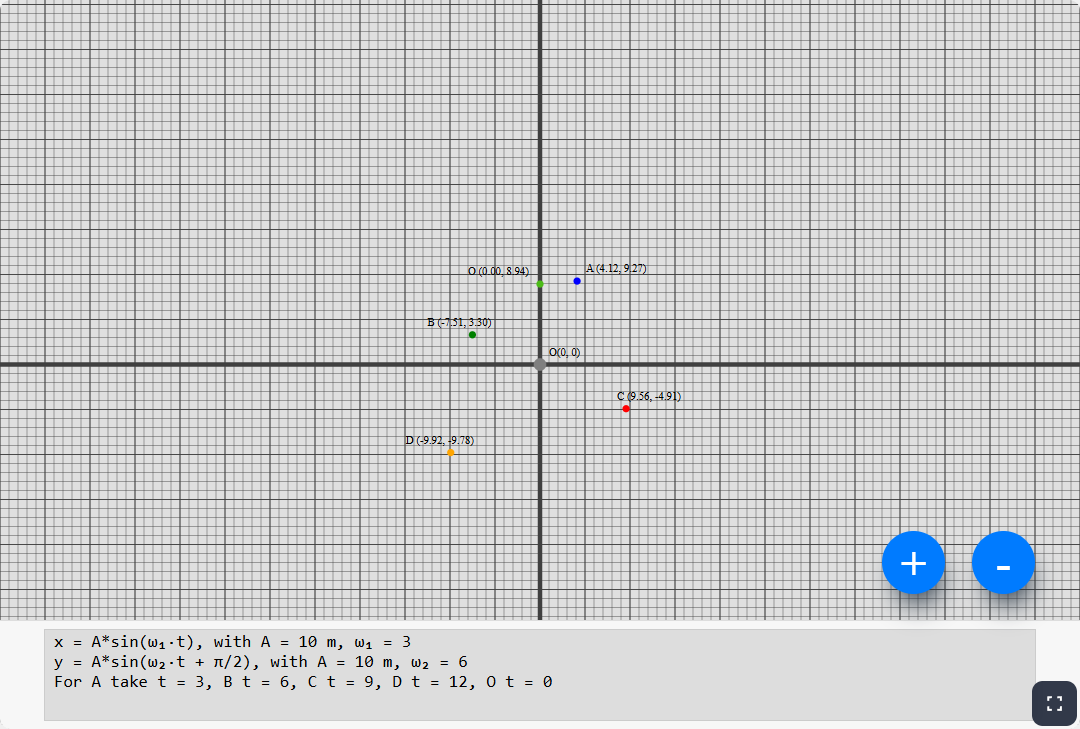
Earthquake
Simulate an earthquake, the propagation of P- and S-waves, and their effects on structures.
Waves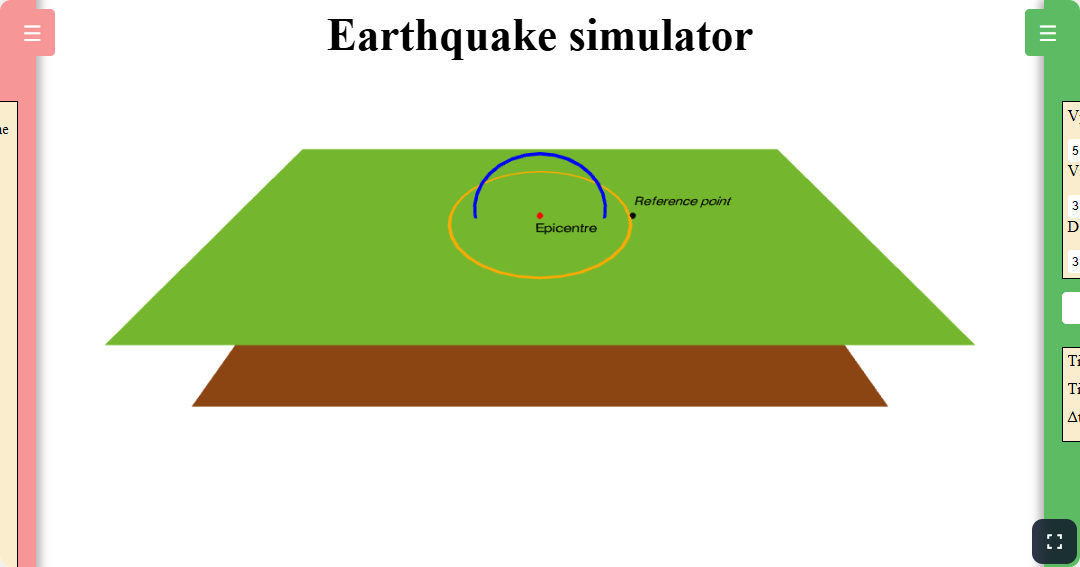
Prism
Simulate the dispersion of white light through a glass prism and the formation of the visible spectrum.
Optics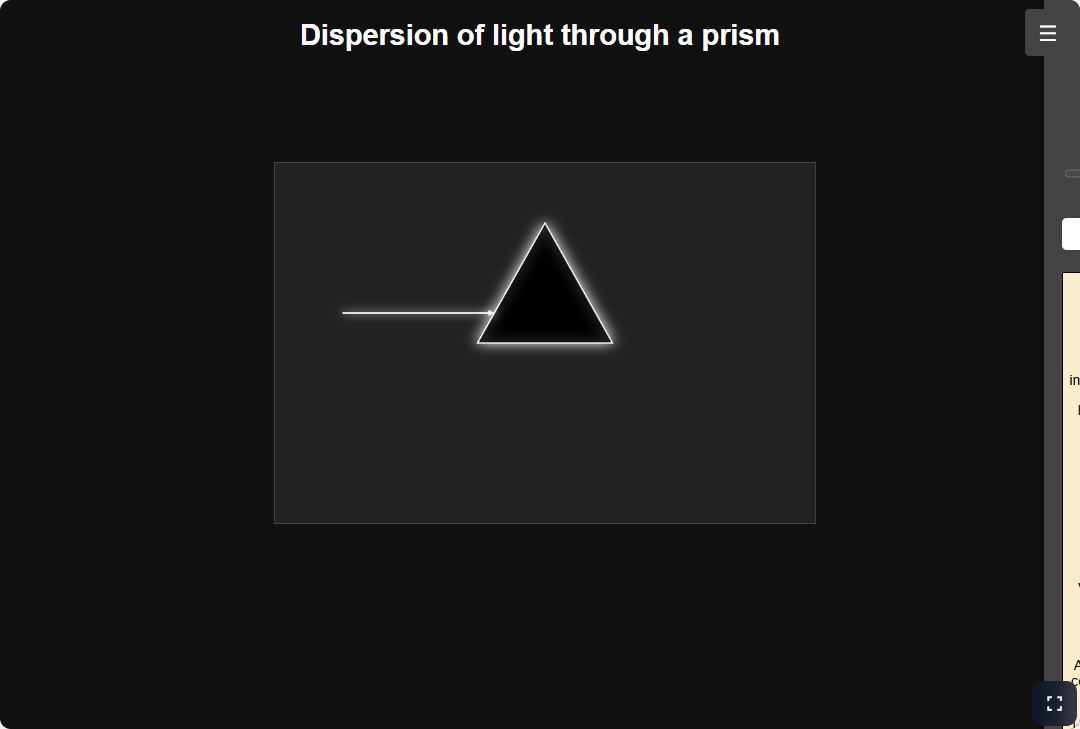
Thermodynamics: Ideal Gas in a Vessel
Adjust pressure, volume, and temperature and watch in real time how an ideal gas behaves in the simulator.
Thermodynamics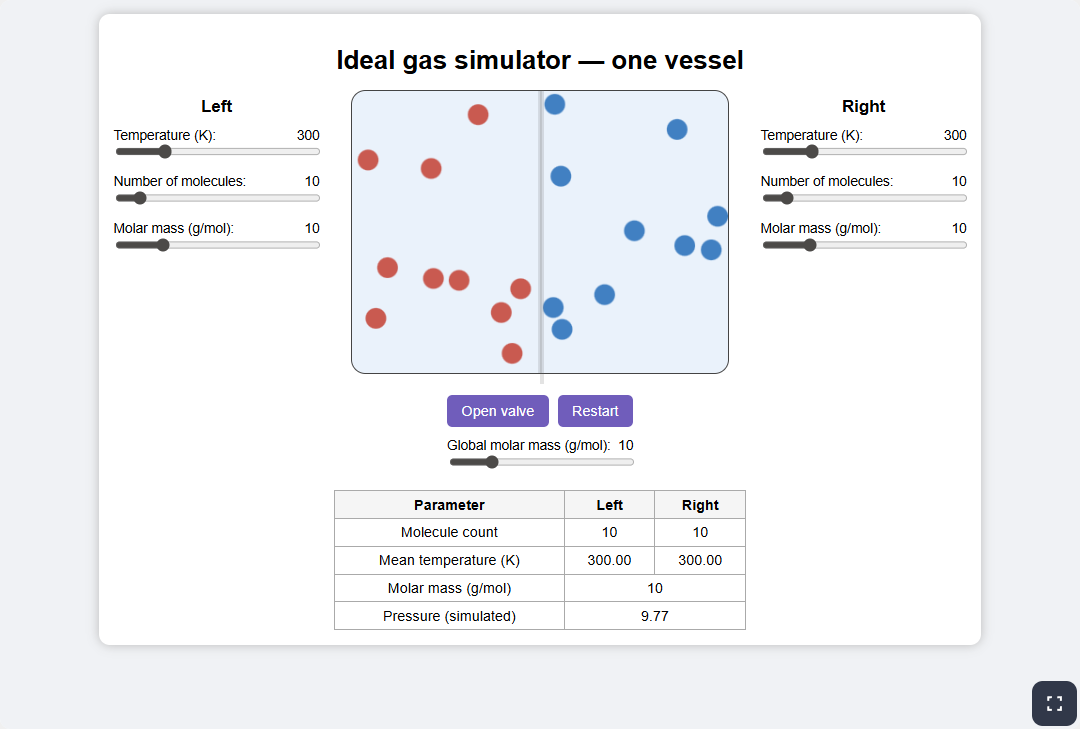
Oscillatory Motion Along the x-Axis
Watch harmonic motion along the x-axis while you change amplitude, frequency, and phase.
Oscillations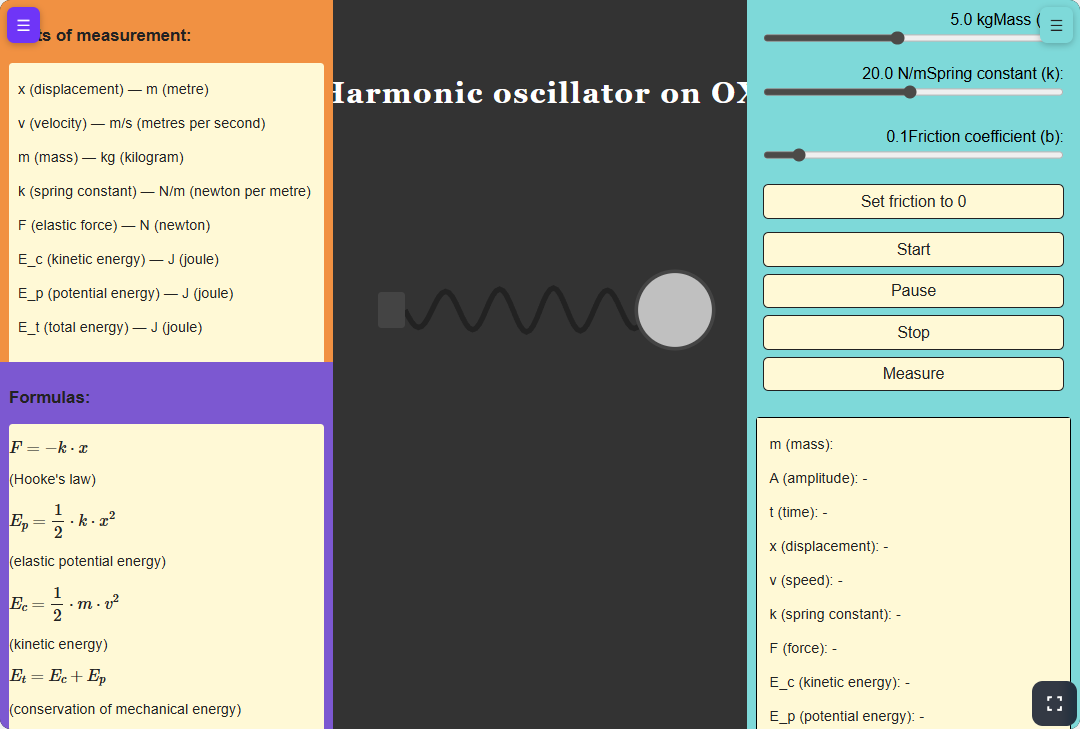
Oscillatory Motion Along the y-Axis
Watch harmonic motion along the y-axis while you change amplitude, frequency, and phase.
Oscillations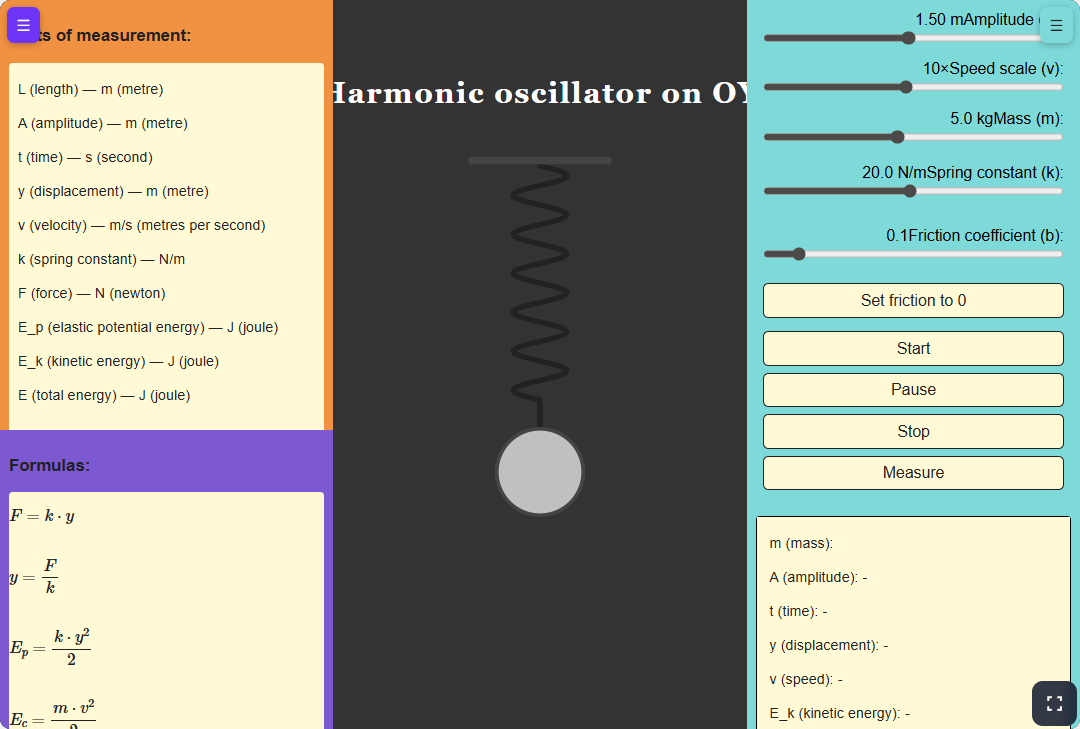
Inelastic Collisions
Simulate inelastic collisions between two bodies and follow the conservation of momentum and the loss of kinetic energy.
Mechanics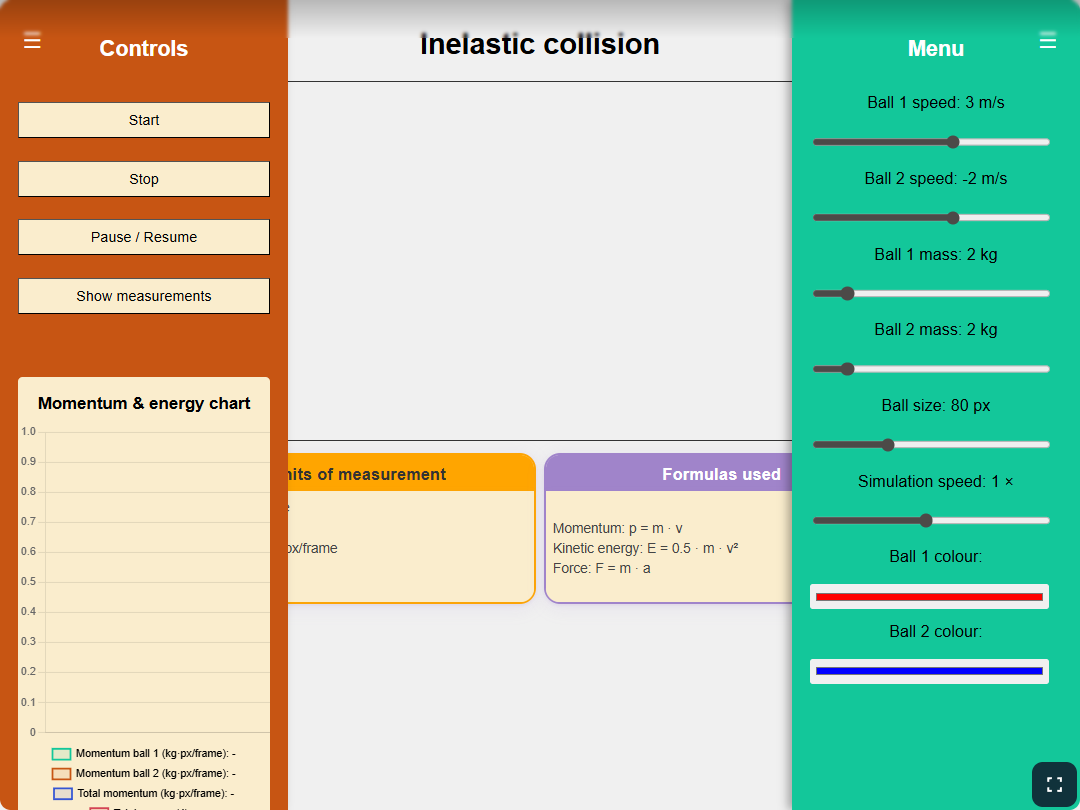
Electric Circuits
Circuit simulator covering Ohm's law, series and parallel resistors, and Kirchhoff's laws.
Electricity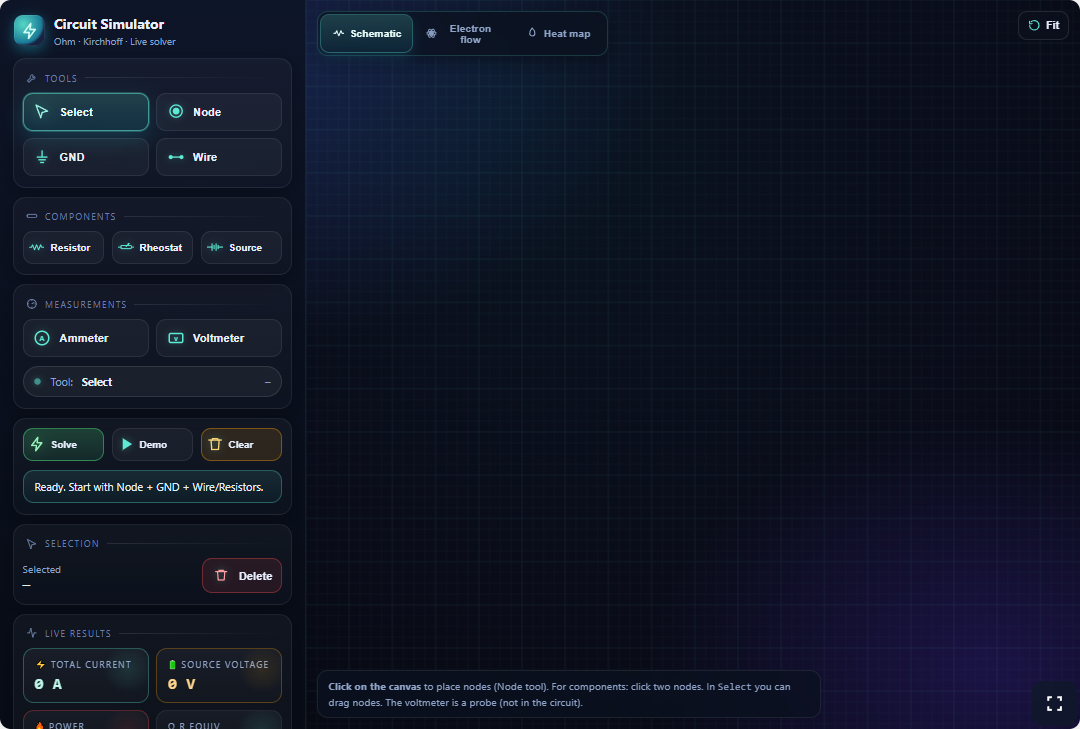
Energy in Circuits
Visualise the energy flow, dissipated power, and efficiency in simple electric circuits.
Electricity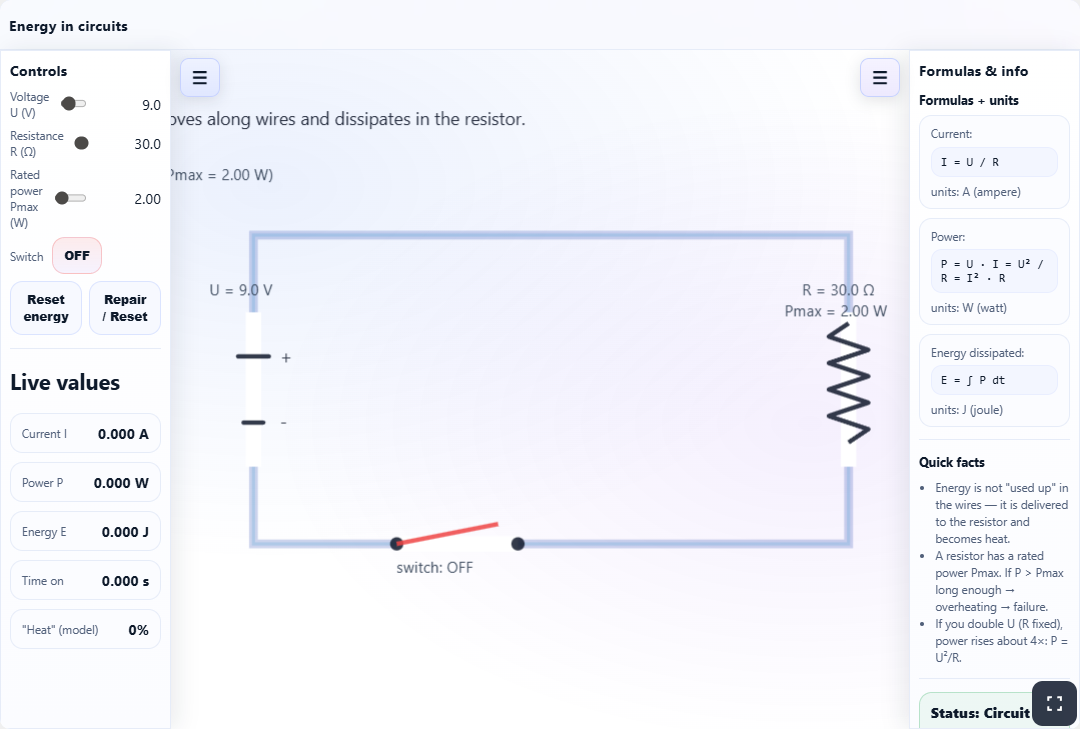
Heat Engines
Simulate Otto, Diesel, and Carnot cycles with p-V and T-S diagrams and follow efficiency in real time.
Thermodynamics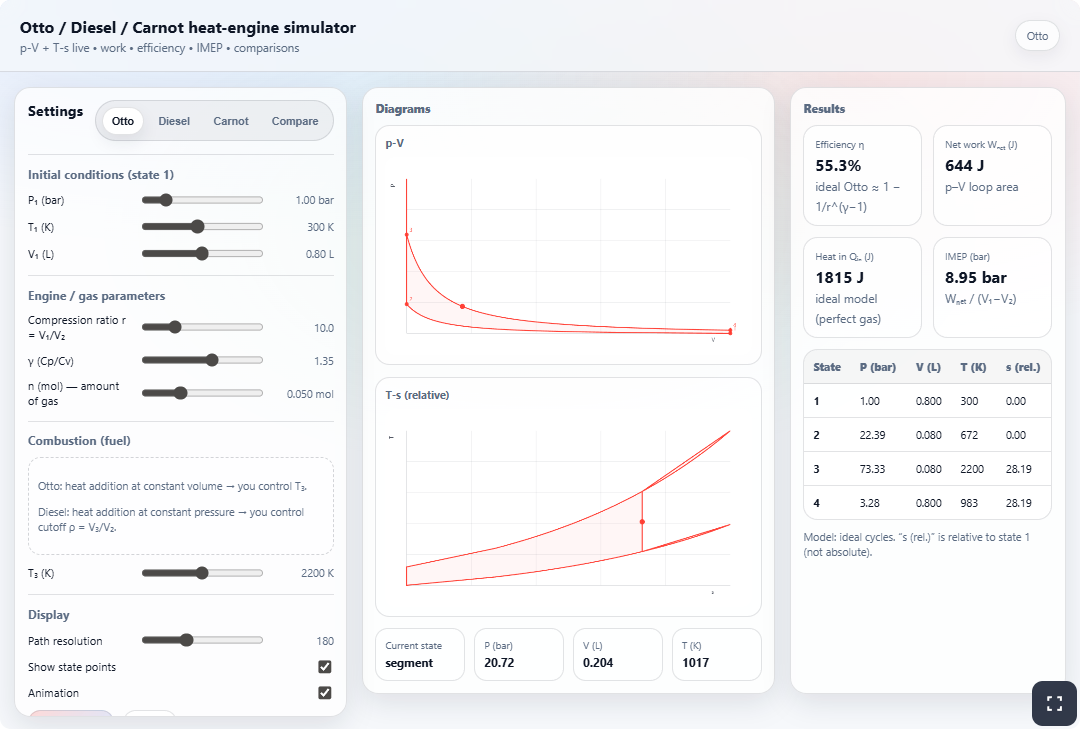
Internal Combustion Engines
Animated Otto, Diesel and 2-stroke cycles: intake, compression, combustion, expansion and exhaust, with interactive p-V diagrams and technical specs.
Thermodynamics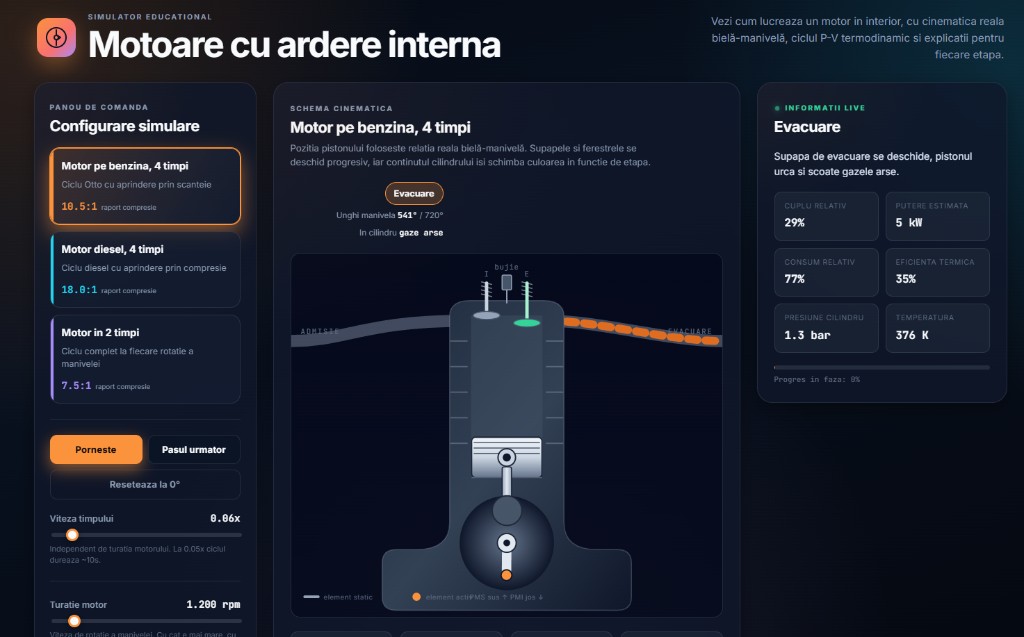
Multiple Double Pendulums
Simulate multiple coupled double pendulums with chaotic behaviour and motion trails.
Pendulums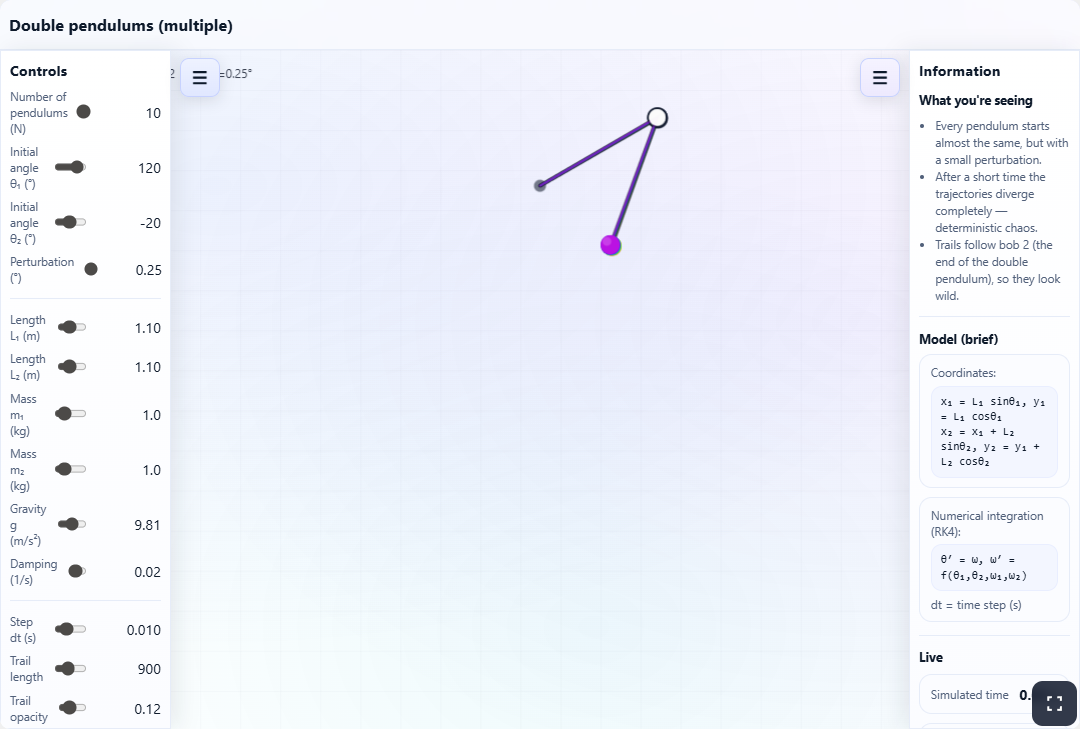
Inclined Plane
Simulate the motion of a body on an inclined plane with static and kinetic friction.
Mechanics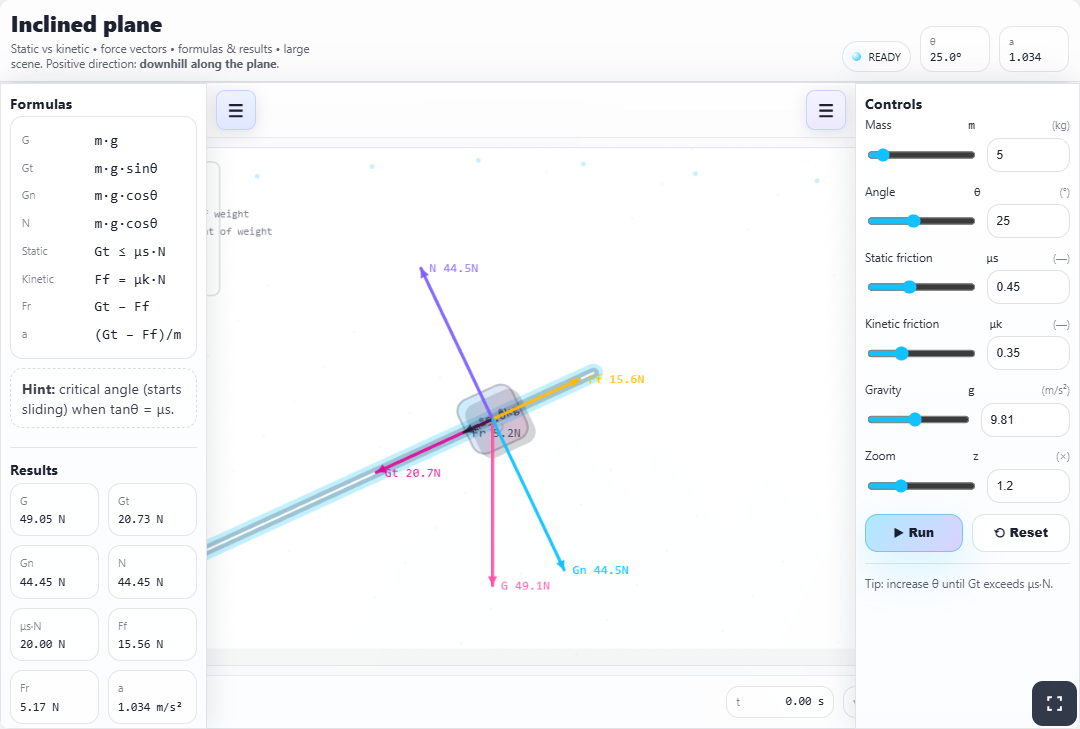
Projectile Motion
Baccalaureate-oriented simulator for projectile motion with and without air resistance.
Mechanics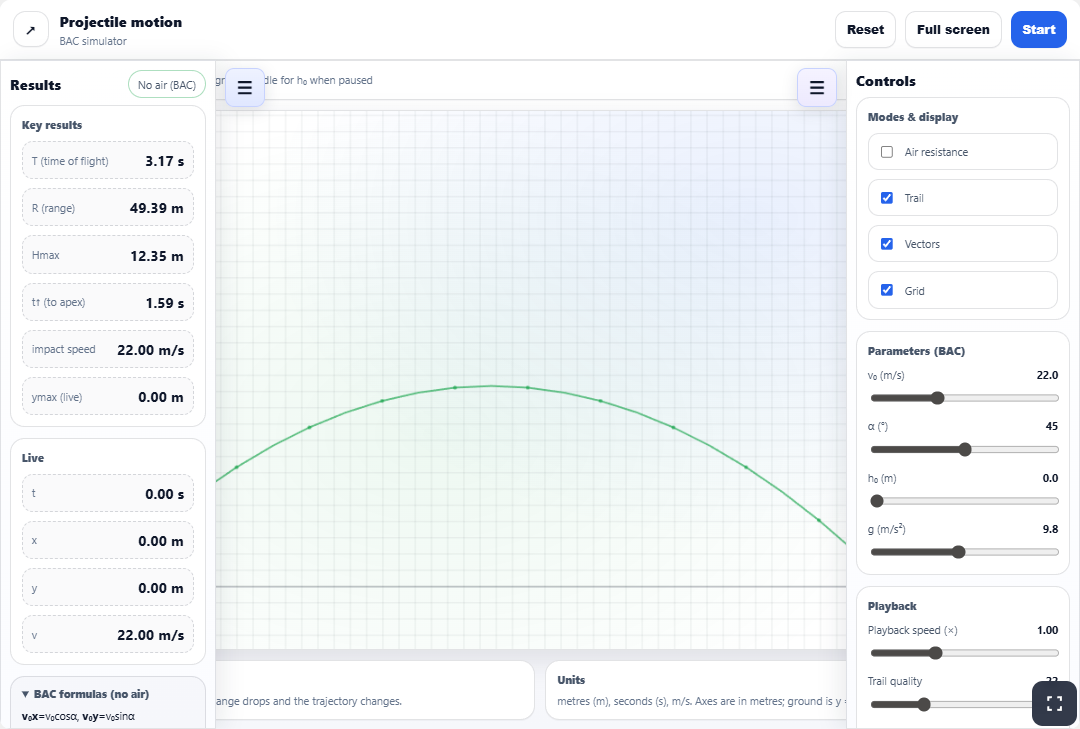
Desert Mirage
Simulate atmospheric refraction and the formation of the desert-mirage effect.
Optics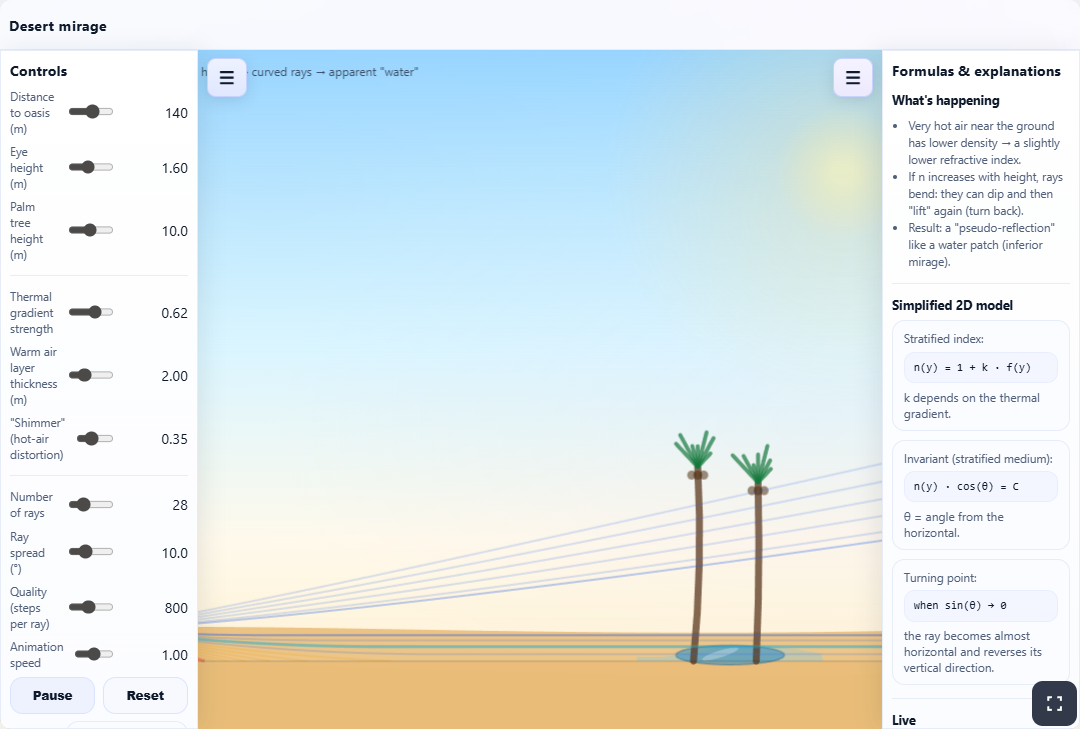
Thin Lens
Optics simulator for thin lenses with ray tracing and the formation of real or virtual images.
Optics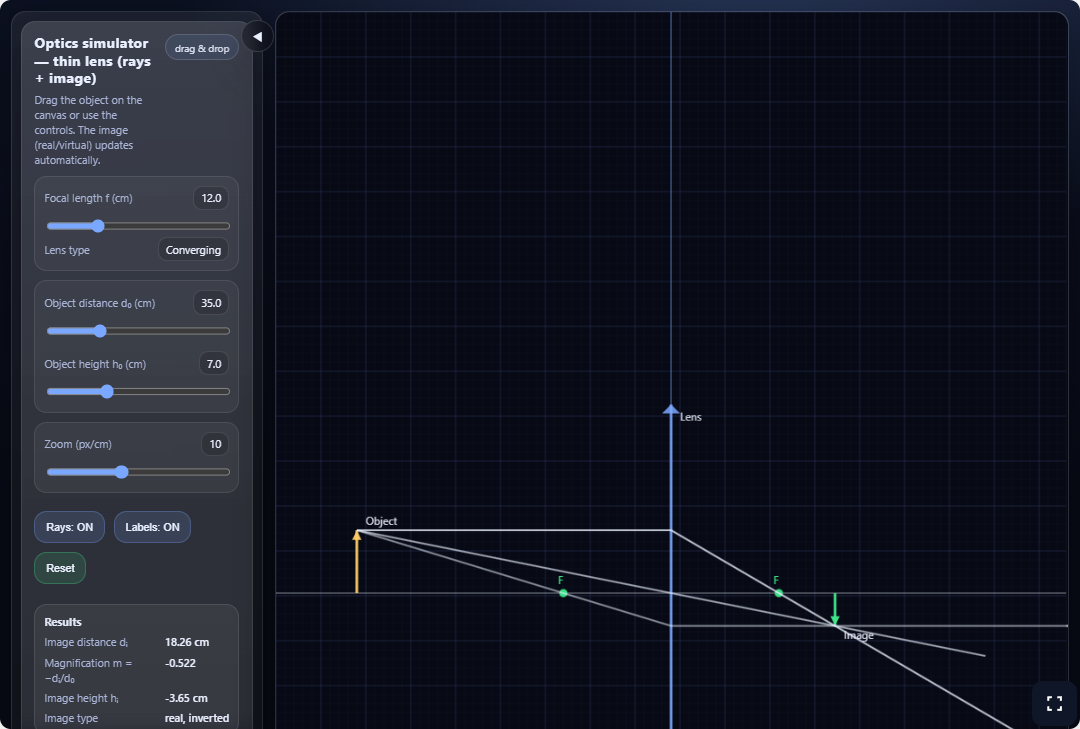
Circular Polarization
Simulate circular polarization of electromagnetic waves with 3D views and Stokes parameters.
Waves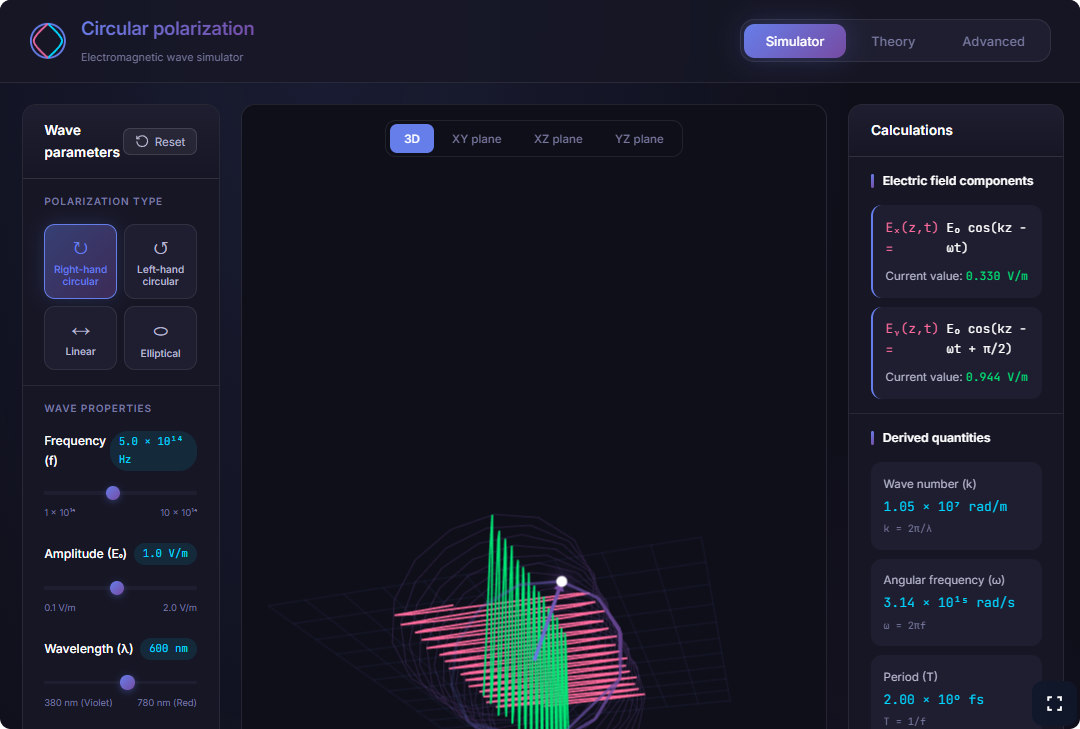
Reflection and Refraction
Explore how light bends and reflects when it passes between media with different refractive indices, including total internal reflection.
Optics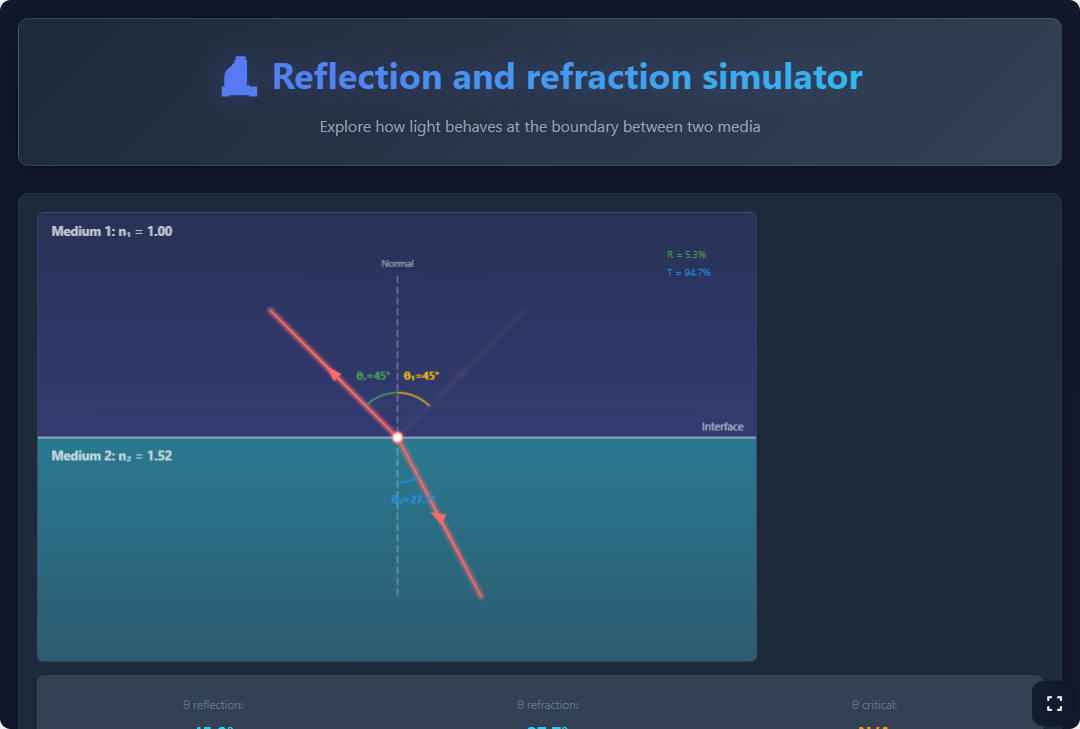
4D Visualizer
Explore and visualise 4D geometric objects through interactive projections, hyperspace rotations, and controlled transitions between dimensions.
4D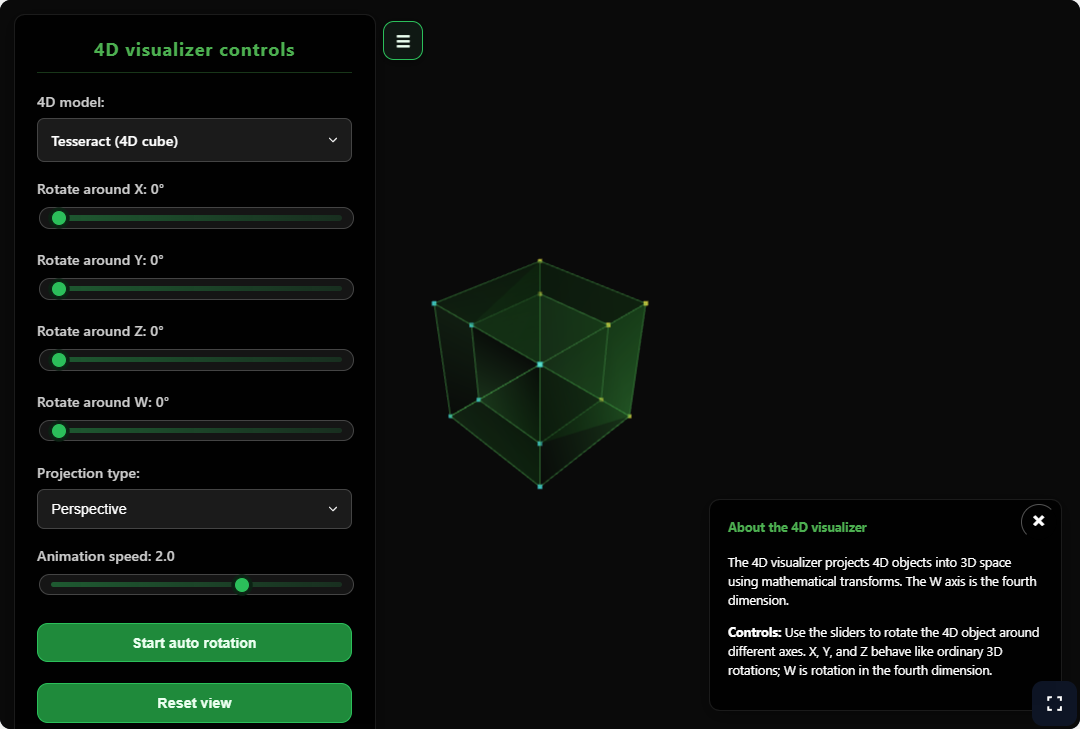
Constellations in the Sky
Interactive sky map covering constellation recognition, orientation using Polaris, short stories, and the link to astronomical coordinates.
Astronomy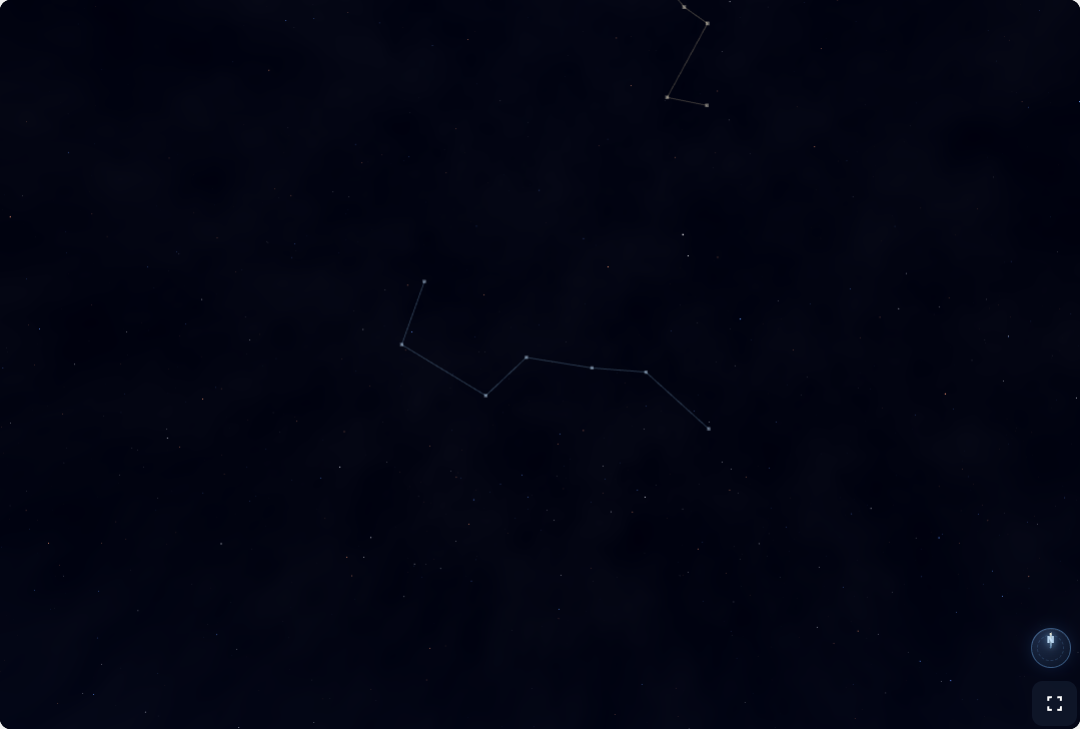
Kepler's Laws
Simulate planetary motion according to Kepler's three laws, with elliptical orbits, varying speed, and the period-radius relation.
Astronomy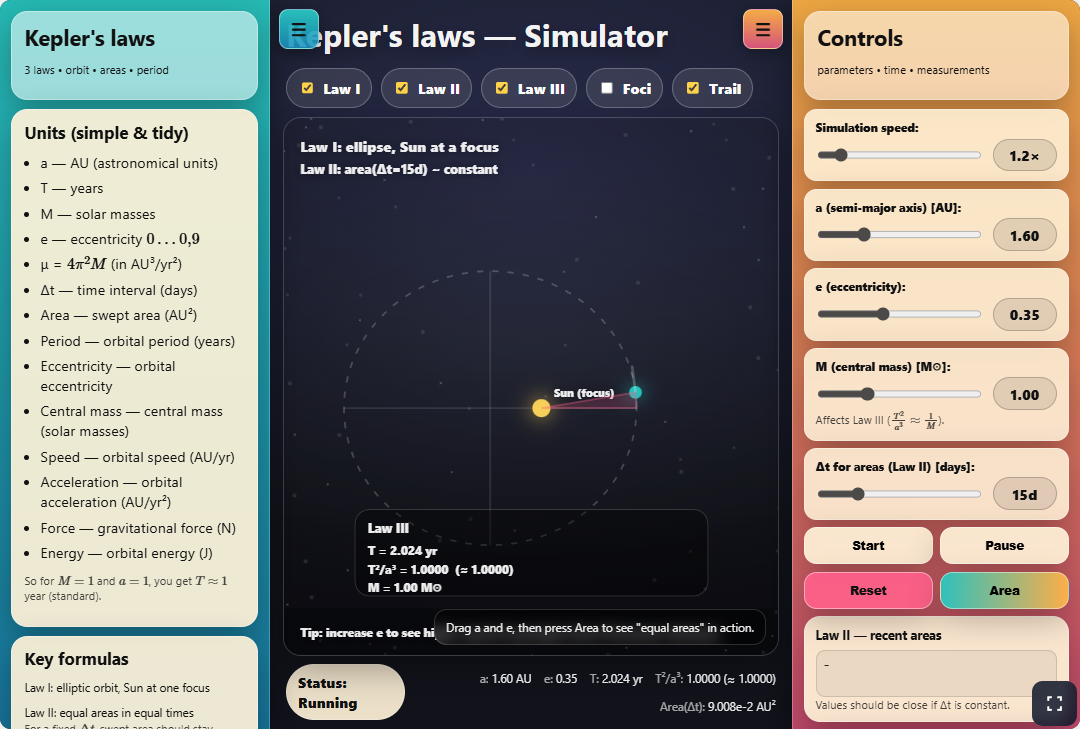
The Hydrogen Atom
Simulate the structure of the hydrogen atom using the Bohr, de Broglie, and quantum-mechanical Schrödinger models, including energy transitions and orbitals.
The Atom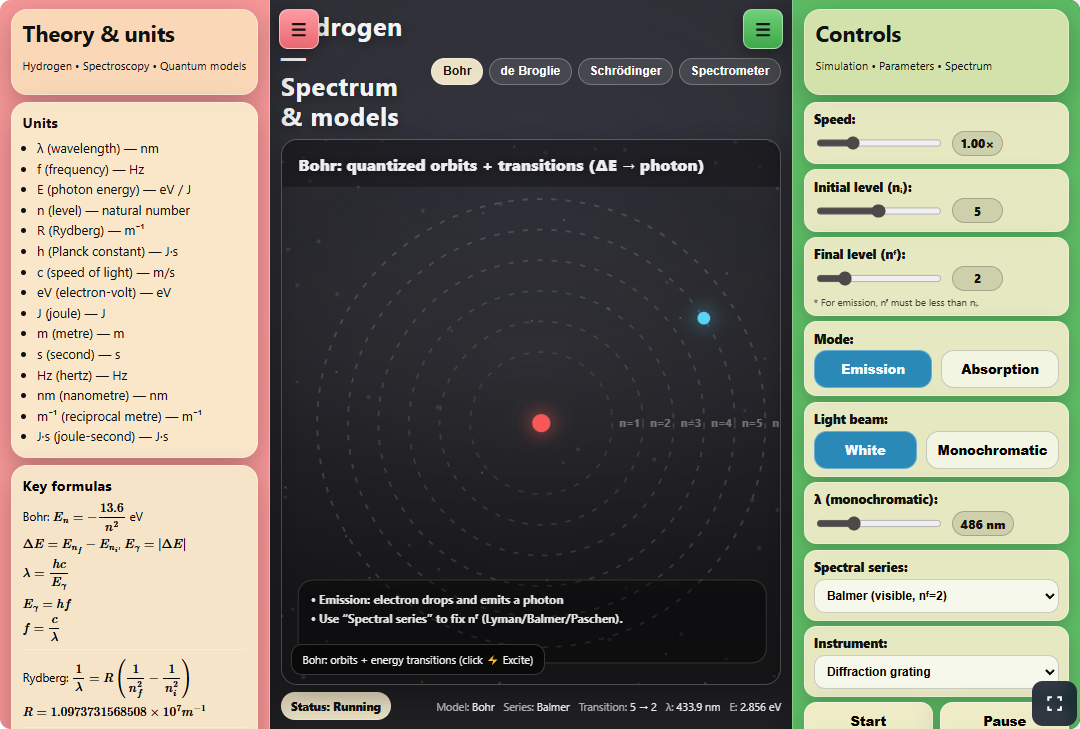
Michelson-Morley Experiment
Recreate the Michelson-Morley experiment virtually and analyse light interference to highlight the absence of the luminiferous ether and its relativistic implications.
Astronomy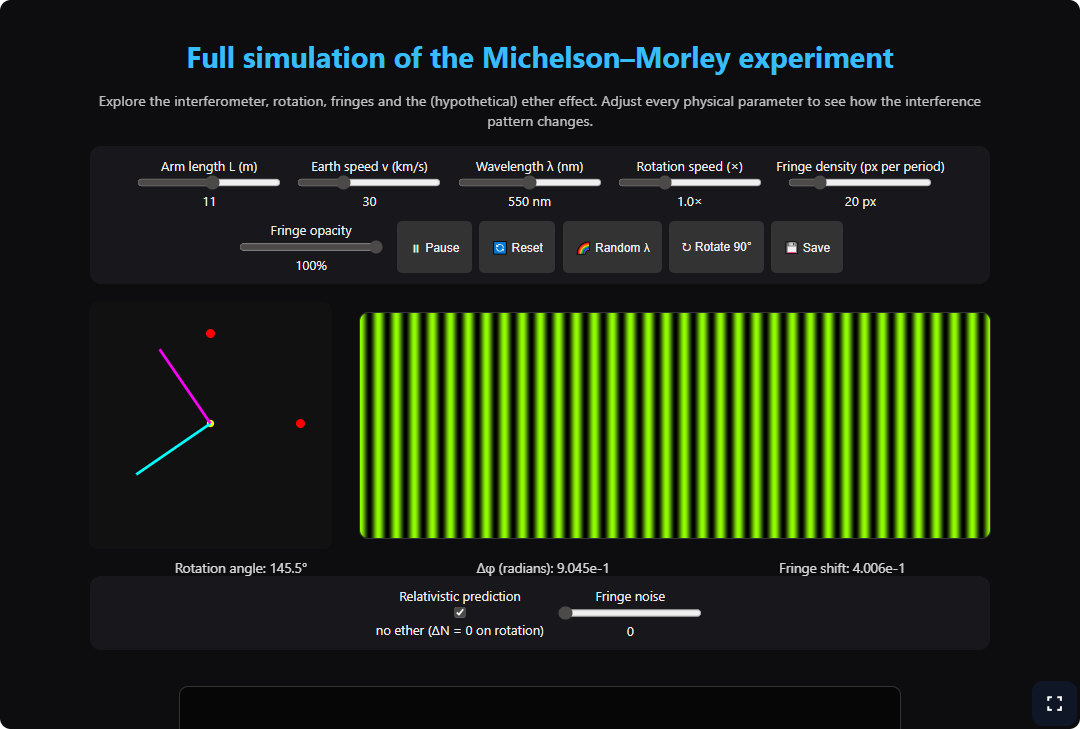
Elastic Chains
Simulate the dynamics of elastic spring chains, mechanical-wave propagation, and coupled oscillatory systems.
Mechanics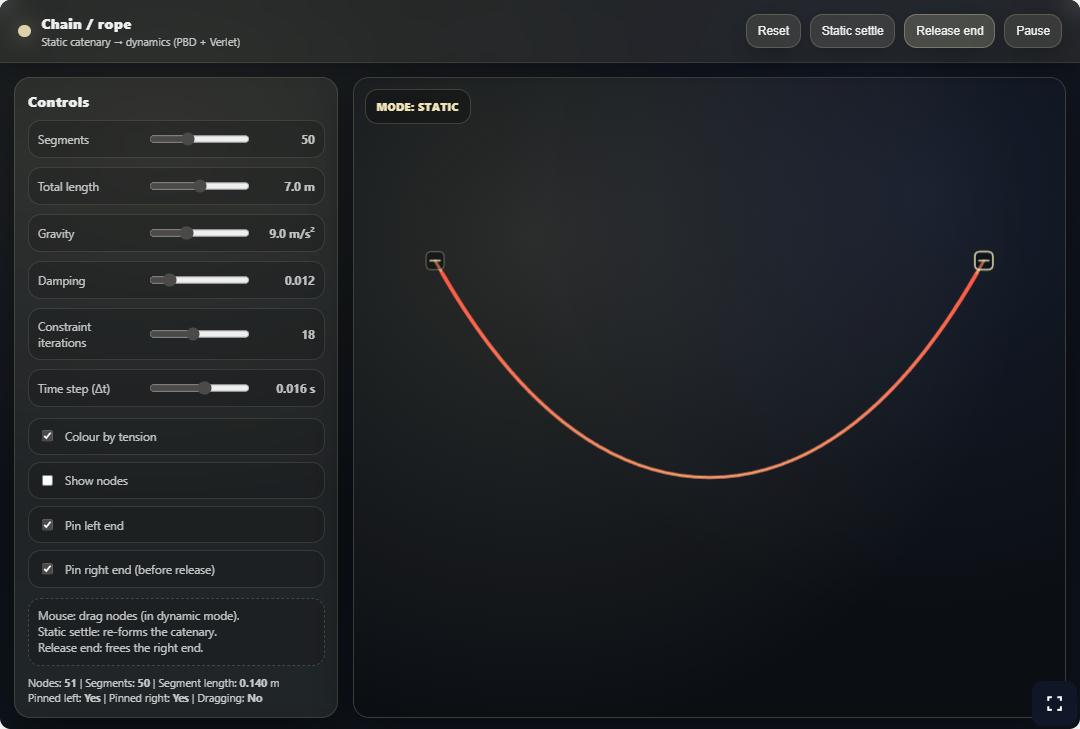
Planetary Motion
Simulate planetary motion in the Solar System, including general-relativistic effects on the orbit of Mercury.
Astronomy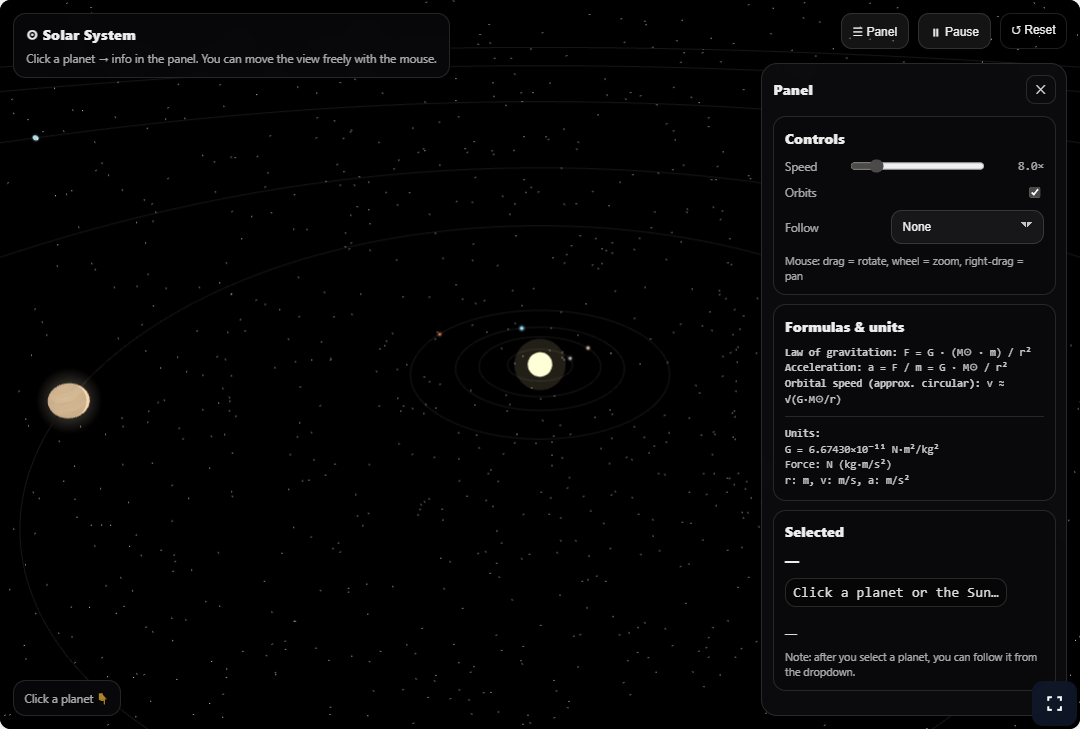
Periodic Table
Explore the periodic table: elements, symbols, atomic number, electron configuration, and basic chemical properties.
The Atom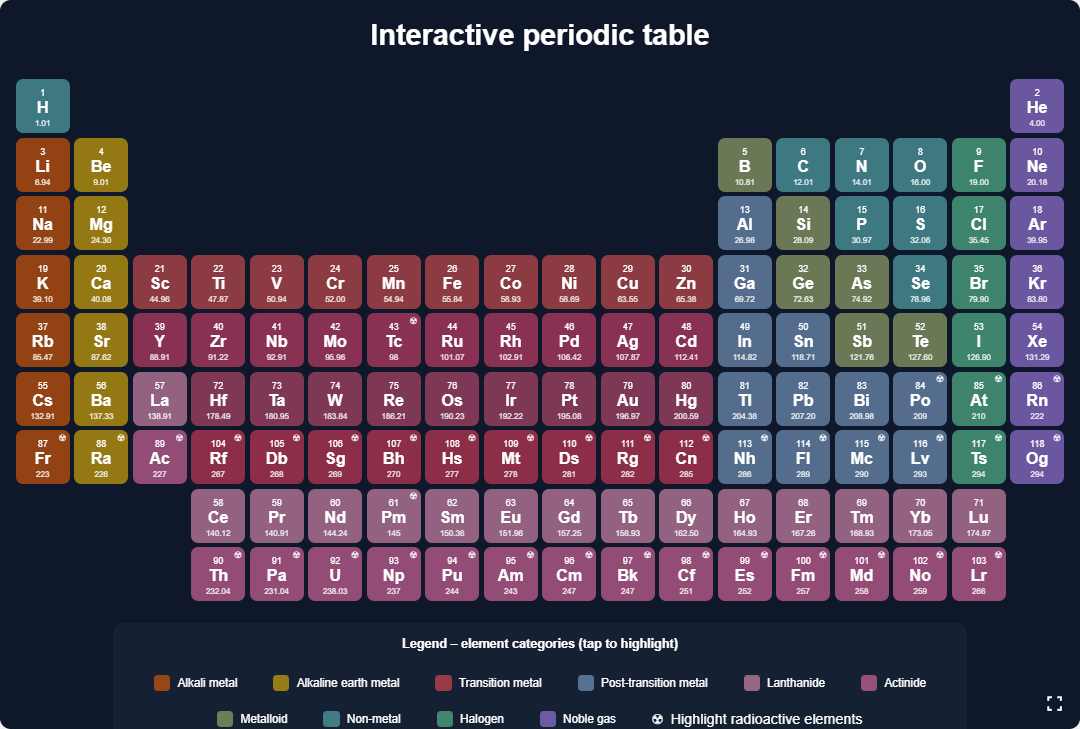
Laser
Simulate a laser beam and key optical parameters such as wavelength, intensity, divergence, and beam profile.
Optics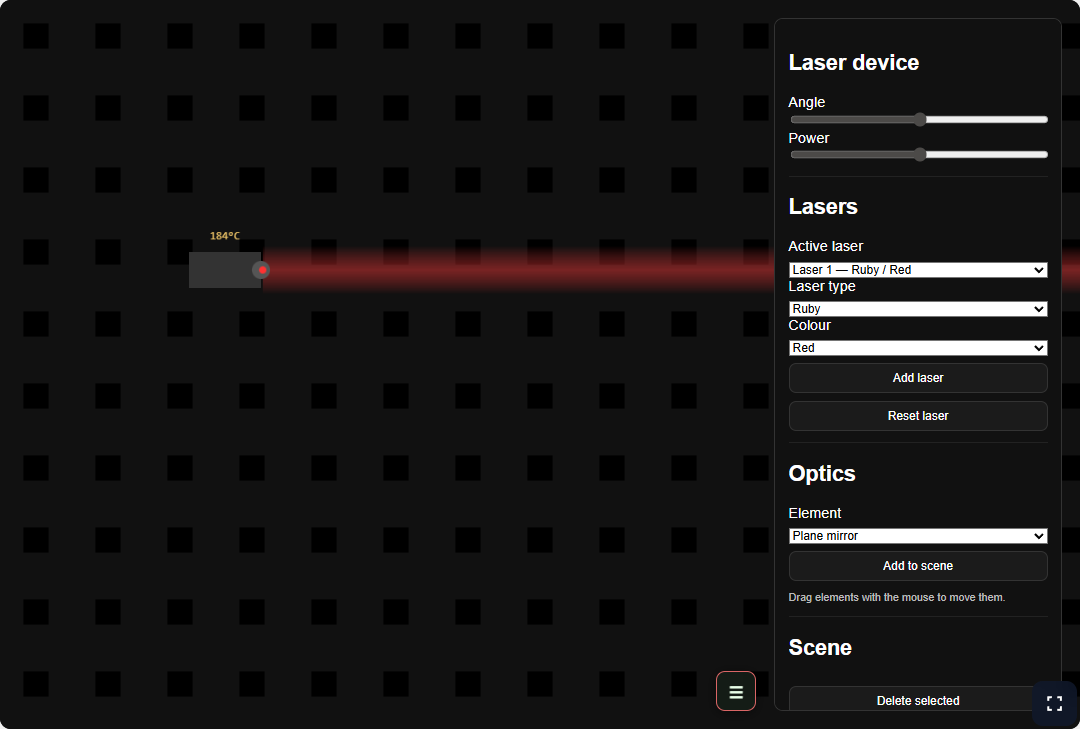
Laser-Matter Interaction
Explore how intensity, target material, and focusing affect heating, ionization, and the interaction between a laser beam and a target.
Lasers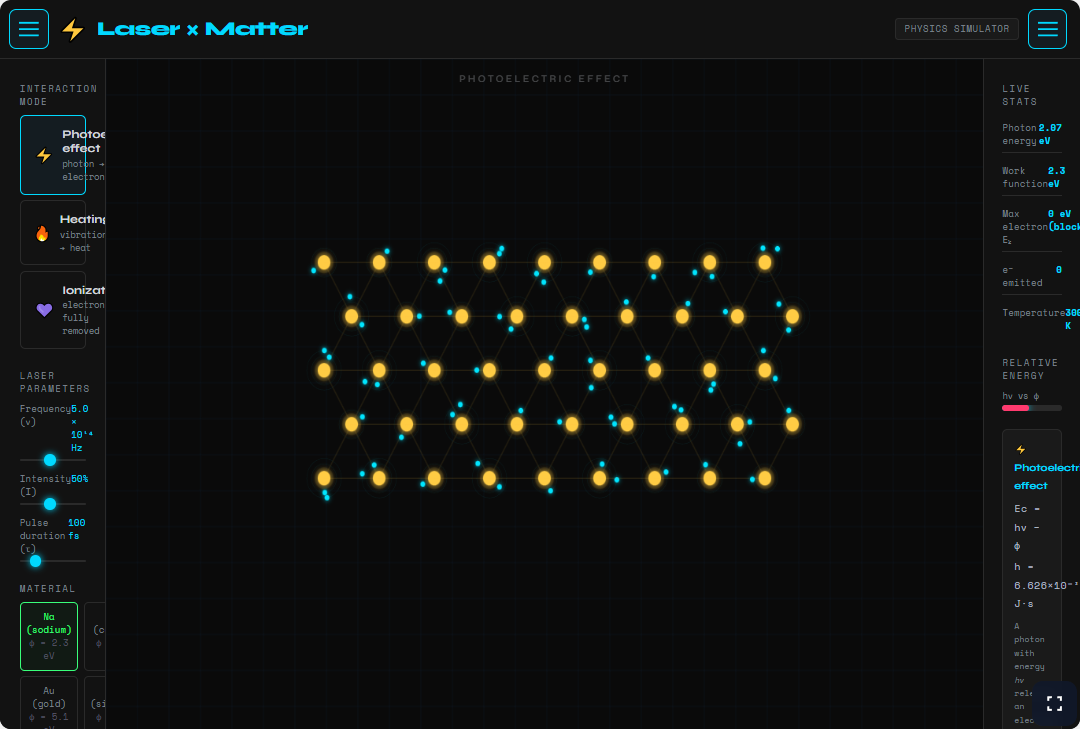
ELI-NP Photon Sniper
Simulator inspired by the ELI-NP context: ultrashort pulses, tight focusing, peak intensity, and the response of the target material.
Lasers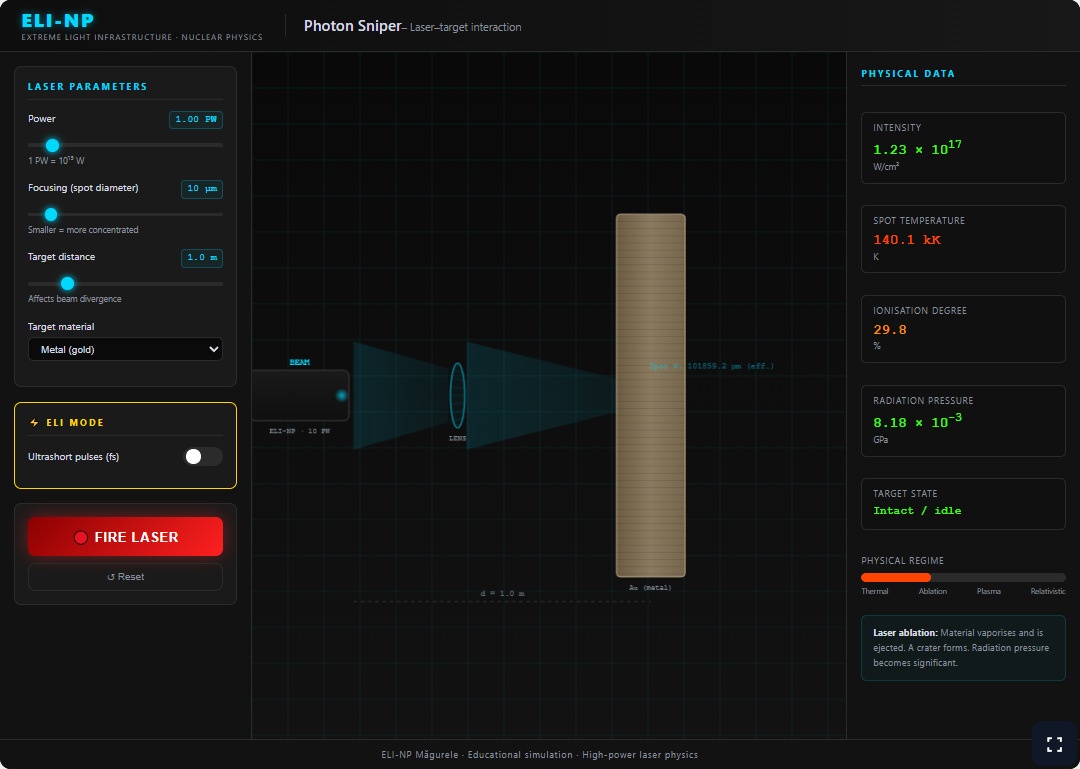
Laser Wakefield Electron Acceleration
Laser-wakefield acceleration simulation showing how pulse intensity and plasma density control electron trapping and the growth of the Lorentz factor.
Lasers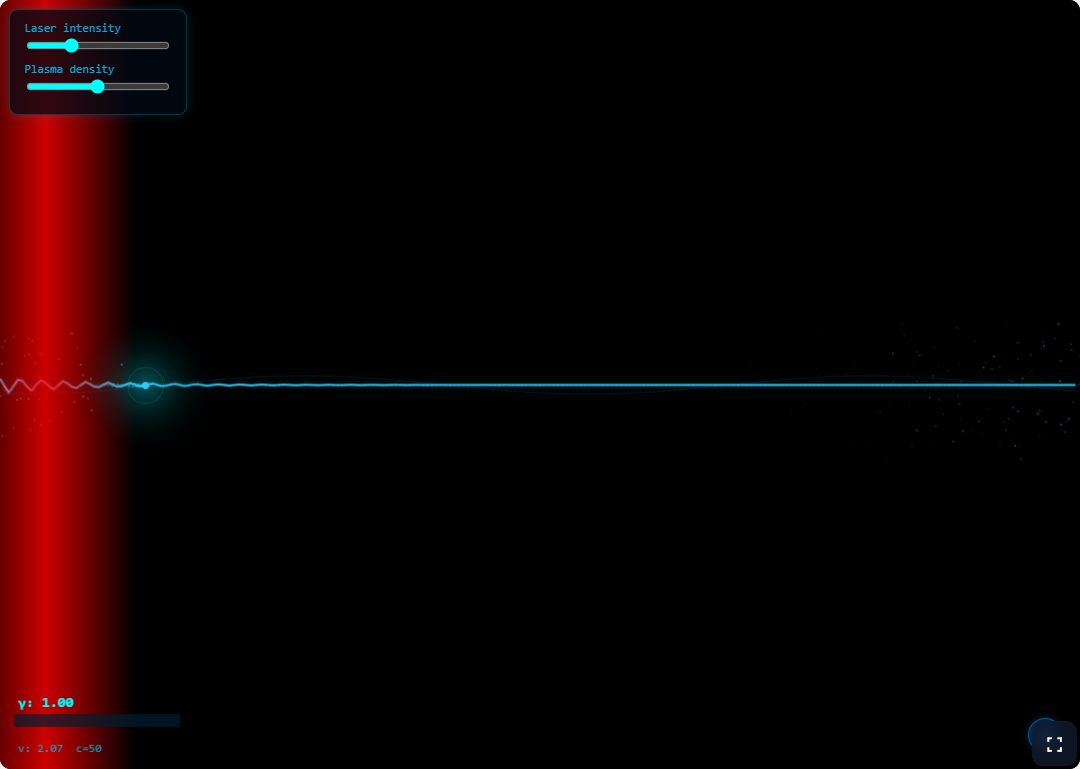
Electromagnetic Spectrum
Explore the full electromagnetic spectrum: frequency, wavelength, photon energy, and applications across each range.
Optics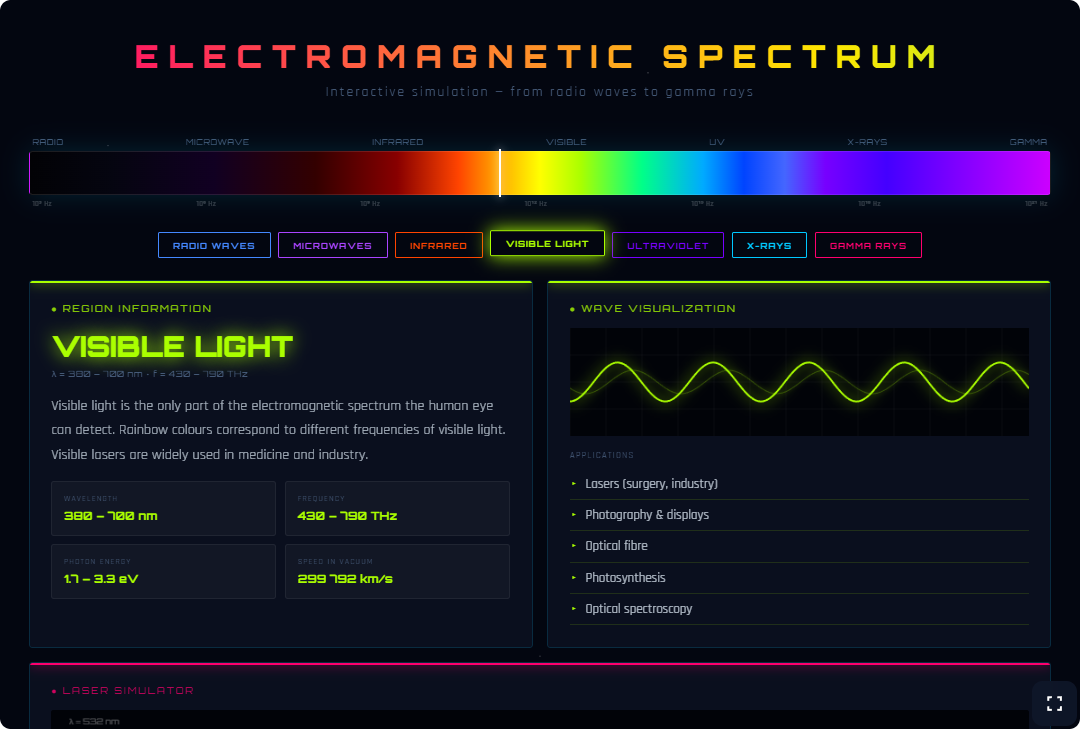
Alternating Current
Interactive simulation of sinusoidal voltage and current: frequency, RMS values, phase, instantaneous power, and phasor view.
Electricity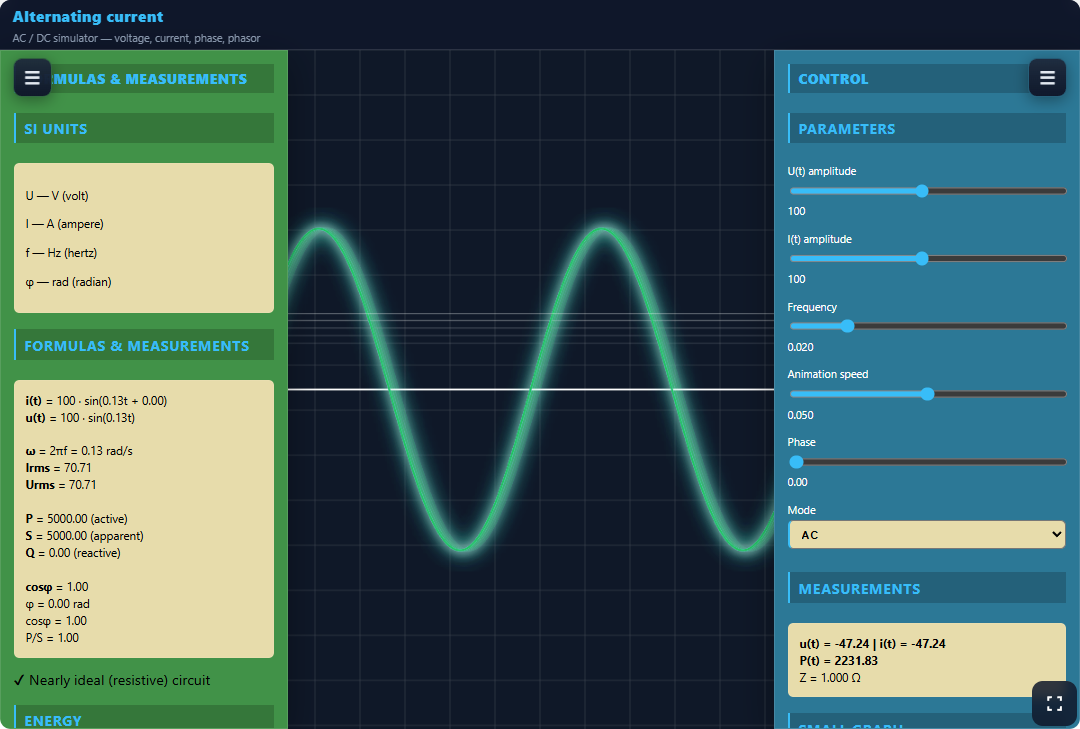
Kirchhoff's Laws
Build and analyse electric circuits with nodes, loops, sources, and resistors using Kirchhoff's current and voltage laws.
Electricity
Double-Slit Experiment
Interference and probability in the double-slit experiment, wave-particle duality, and the pattern observed on the screen.
Quantum Physics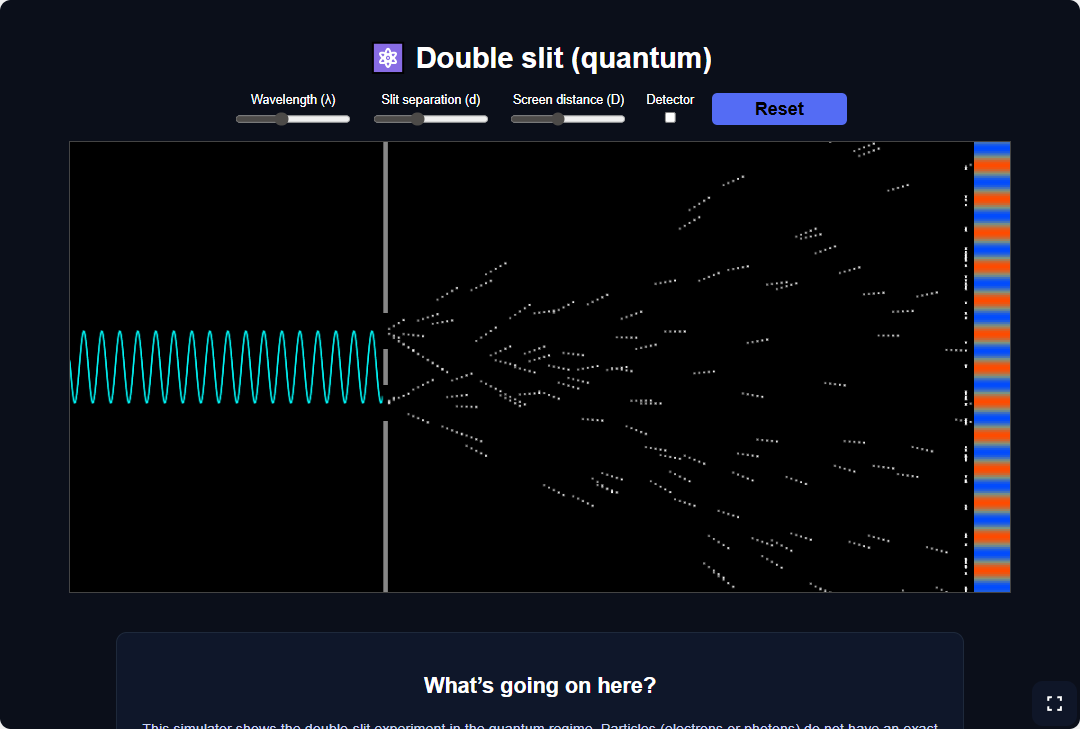
Quantum Tunneling
Penetration of a potential barrier when the particle's energy is below the barrier height, with evanescent waves and the transmission coefficient.
Quantum Physics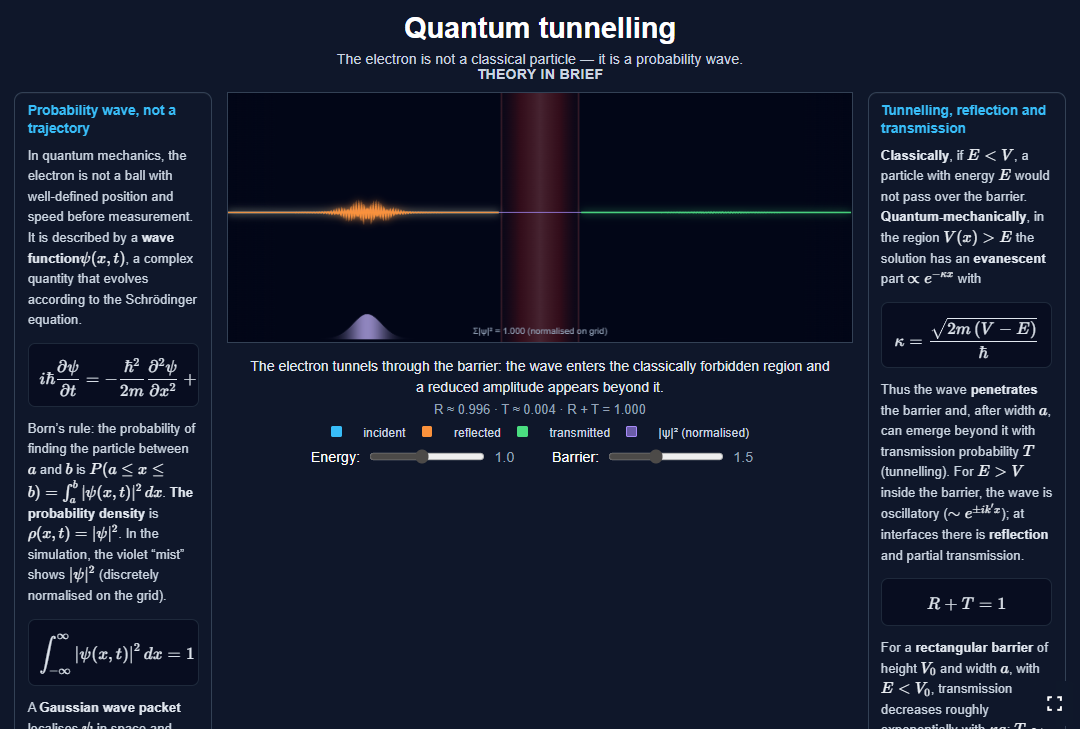
Atomic Bonds
Visualise chemical bonds, bonding and antibonding molecular orbitals, and the probability-density distribution between nuclei.
Quantum Physics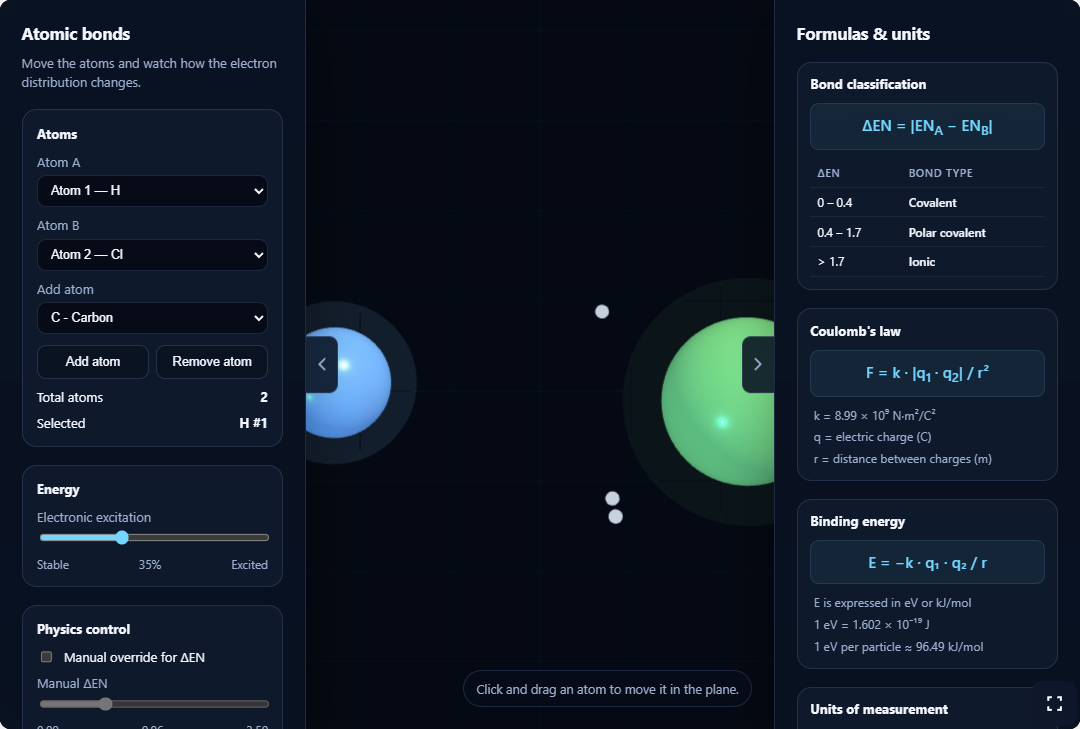
D2O vs H2O
Compare heavy water (D2O) with regular water (H2O): liquid-phase fraction, indicative biological effects, density, boiling and freezing points, and moderation behaviour in a reactor.
Nuclear Physics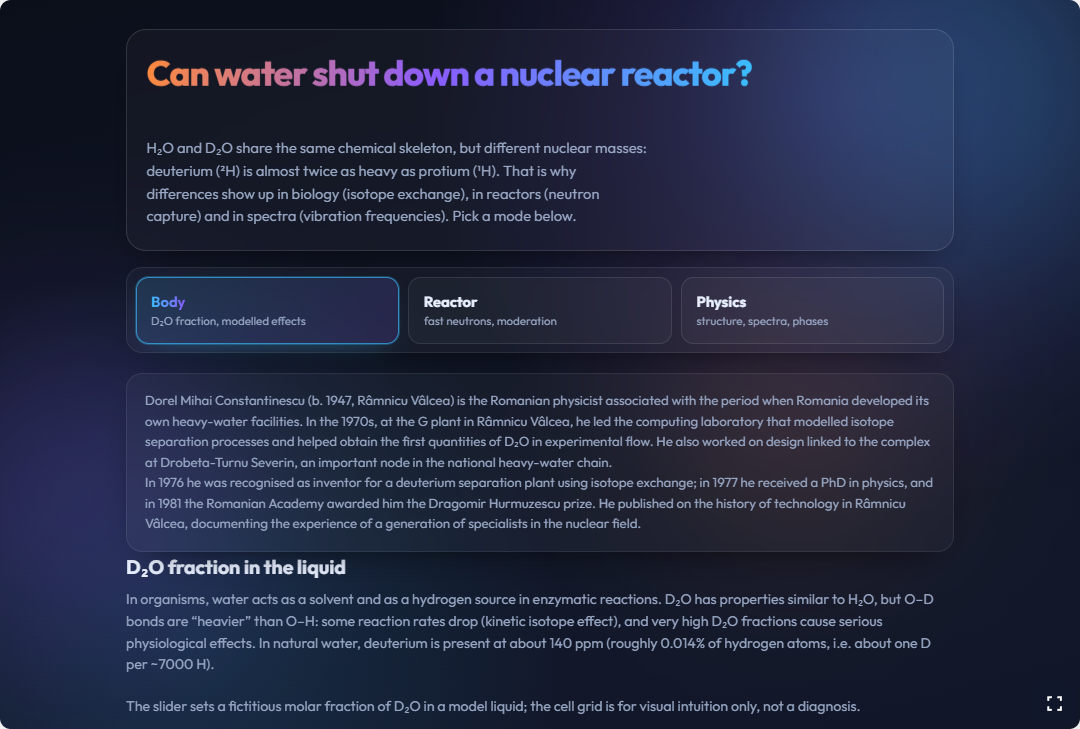
Isotope Exchange Plant (H2S-H2O)
Simulate the heavy-water separation process: stages, isotope exchange, concentration evolution, and process efficiency.
Nuclear Physics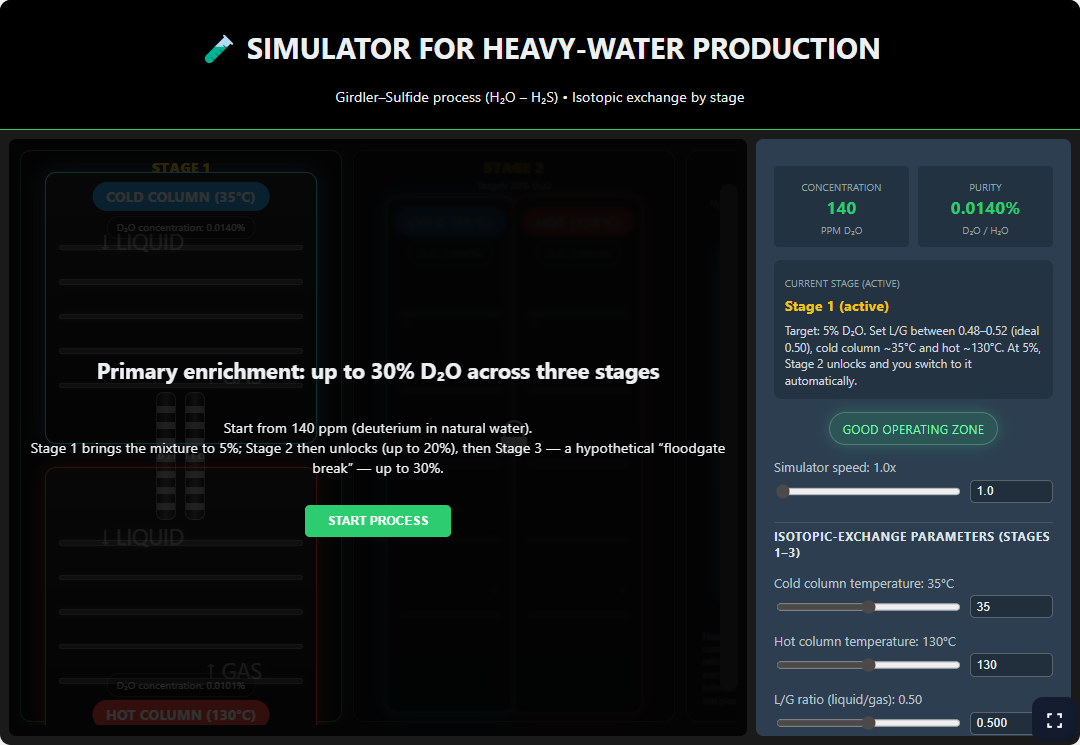
Fractional D2O Distillation
Single column with reboiler and condenser: reflux, theoretical stages, low relative volatility, and the purity-versus-time curve following isotope exchange.
Nuclear Physics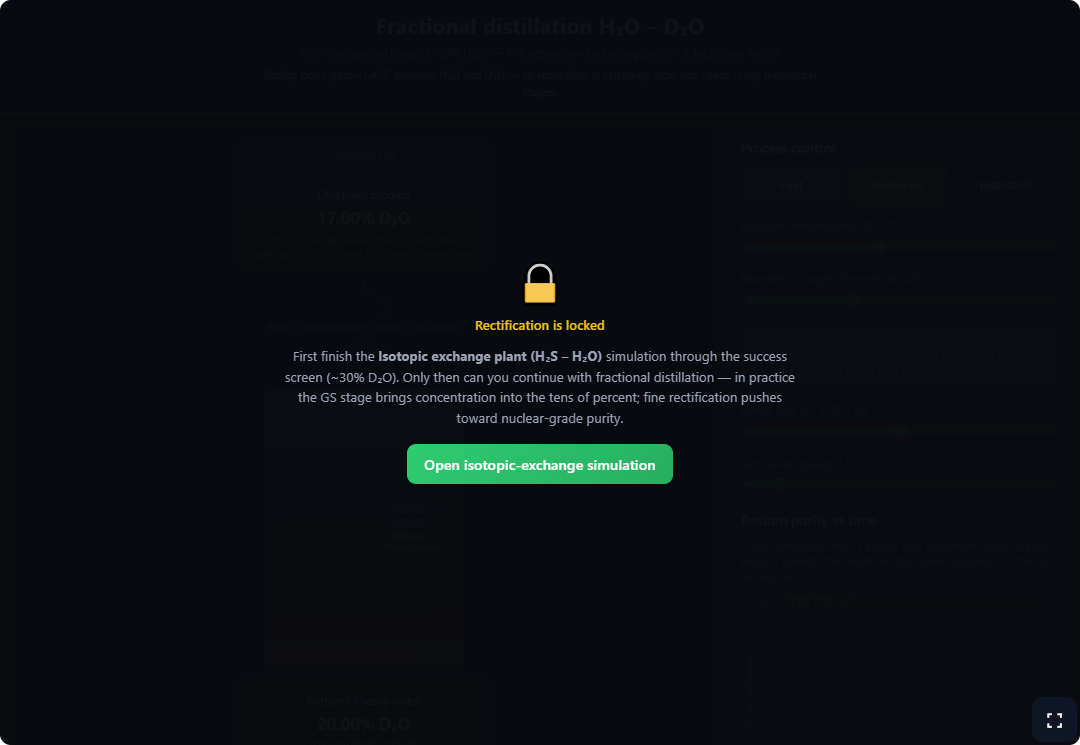
Air Resistance
Compare the fall of two bodies in gravity with aerodynamic drag: terminal velocity, mass, shape, and cross-sectional area.
Mechanics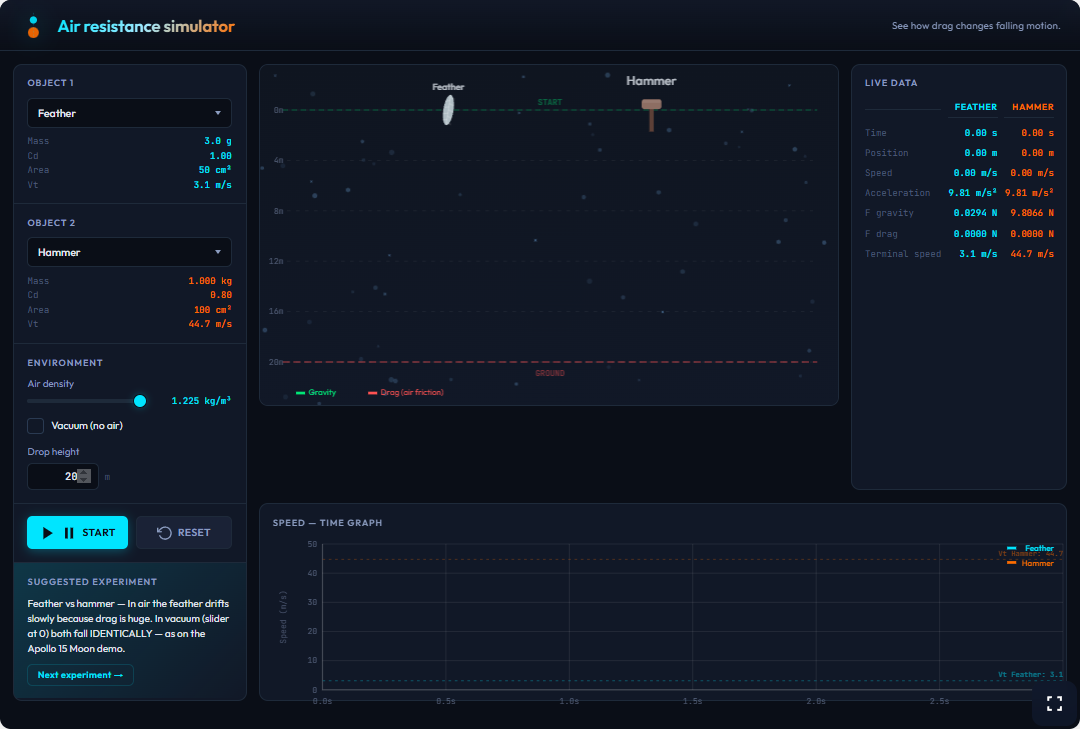
D-T Fusion Reactor (Educational Model)
Educational toy model for D–T fusion: temperature, pressure, and neutron flux change particle motion and fusion rate; cumulative energy (~17.6 MeV per event), stability warnings, time-series chart, and a visual meltdown scenario.
Nuclear Physics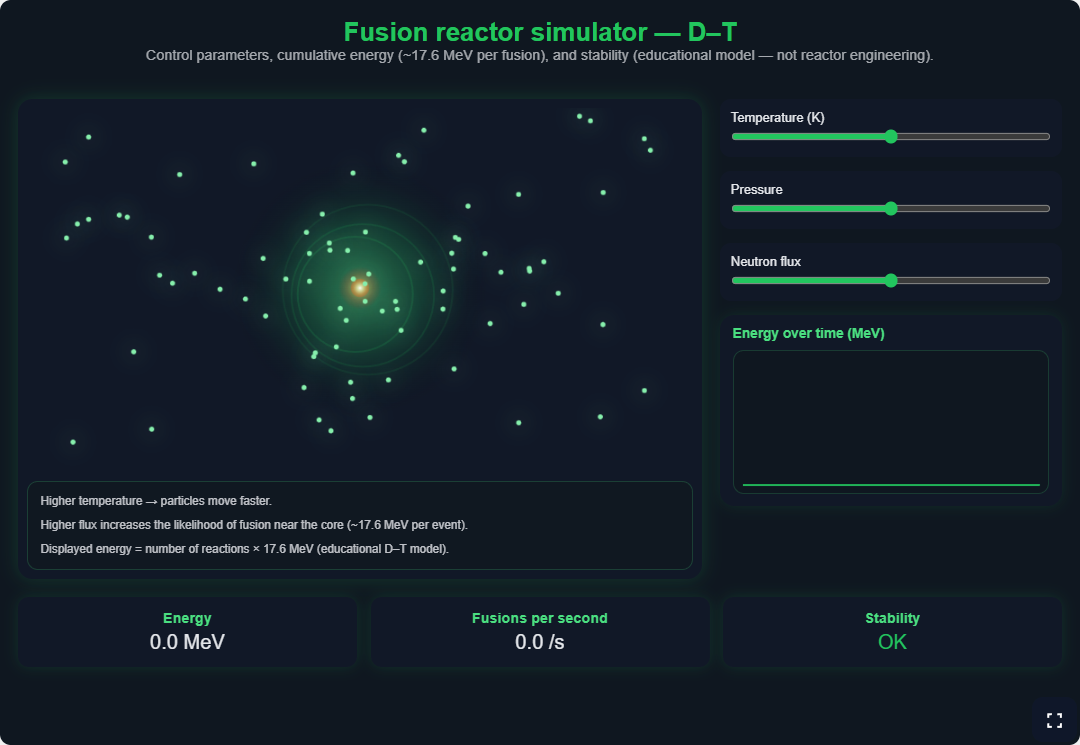
Nuclear Chain Fission (U-235)
Neutron-induced fission in U-235, the release of 2-3 new neutrons, roughly 200 MeV per event, the multiplication factor k, and control rods in an educational visual model.
Nuclear Physics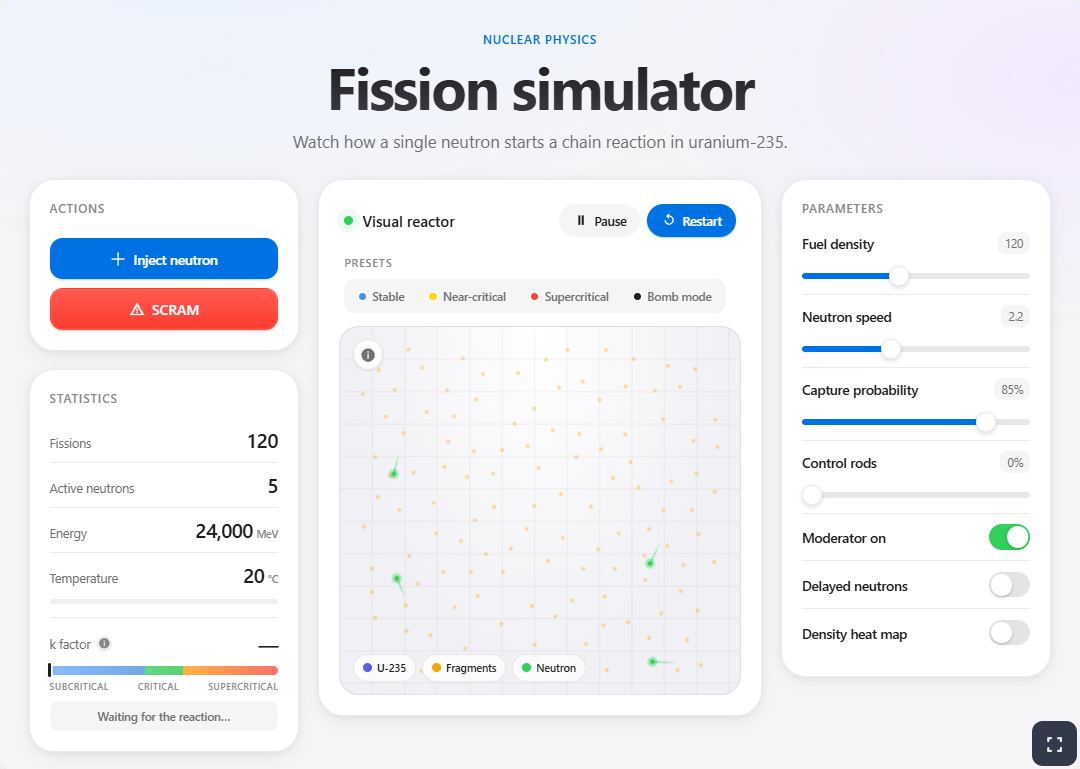
Uranium Isotopes: Nucleus, Alpha Decay, Fission, and Time
Four key uranium isotopes from U-233 to U-238: nuclear model, alpha decay, U-235 fission scenario, and a time machine using N(t) based on half-life.
Nuclear Physics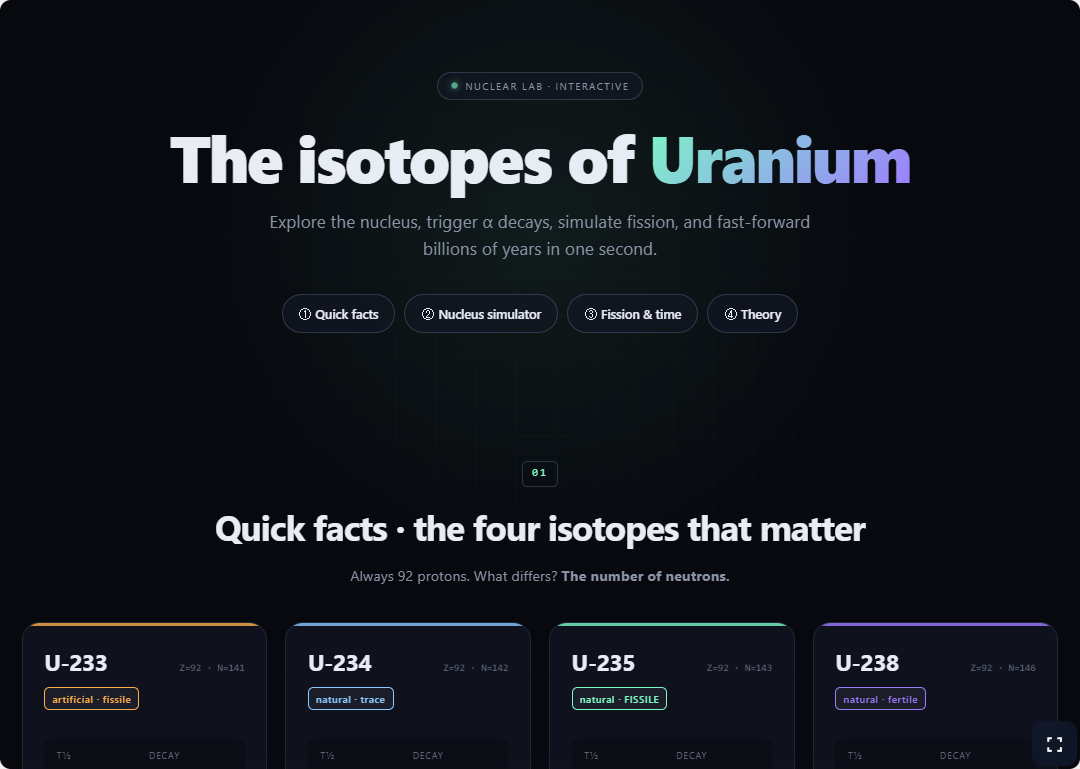
Map of the 26 Uranium Isotopes
The Z = 92 line on the nuclide chart: all known isotopes from A = 217 to 242, decay modes, historical timeline, and the radioactive law N(t) with lambda and half-life.
Nuclear Physics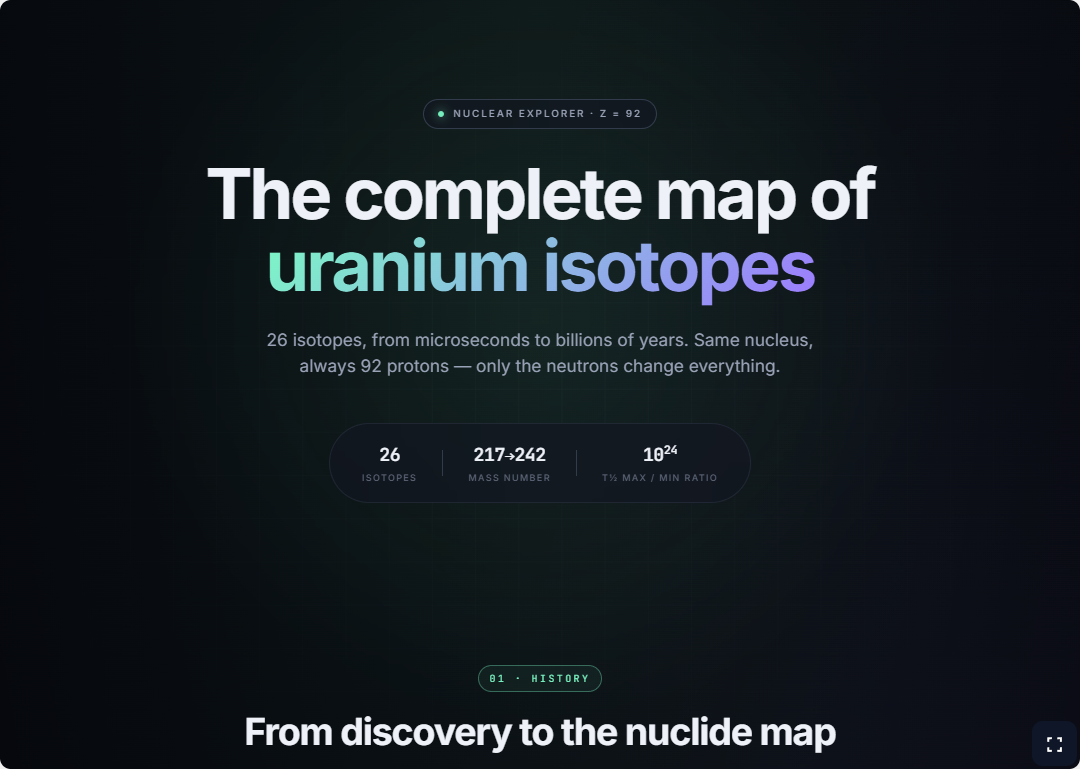
Cryogenics and States of Matter
Explore low-temperature regimes: the pV = nRT relation, particle dynamics, and transitions between gas, liquid, and solid for different materials.
Thermodynamics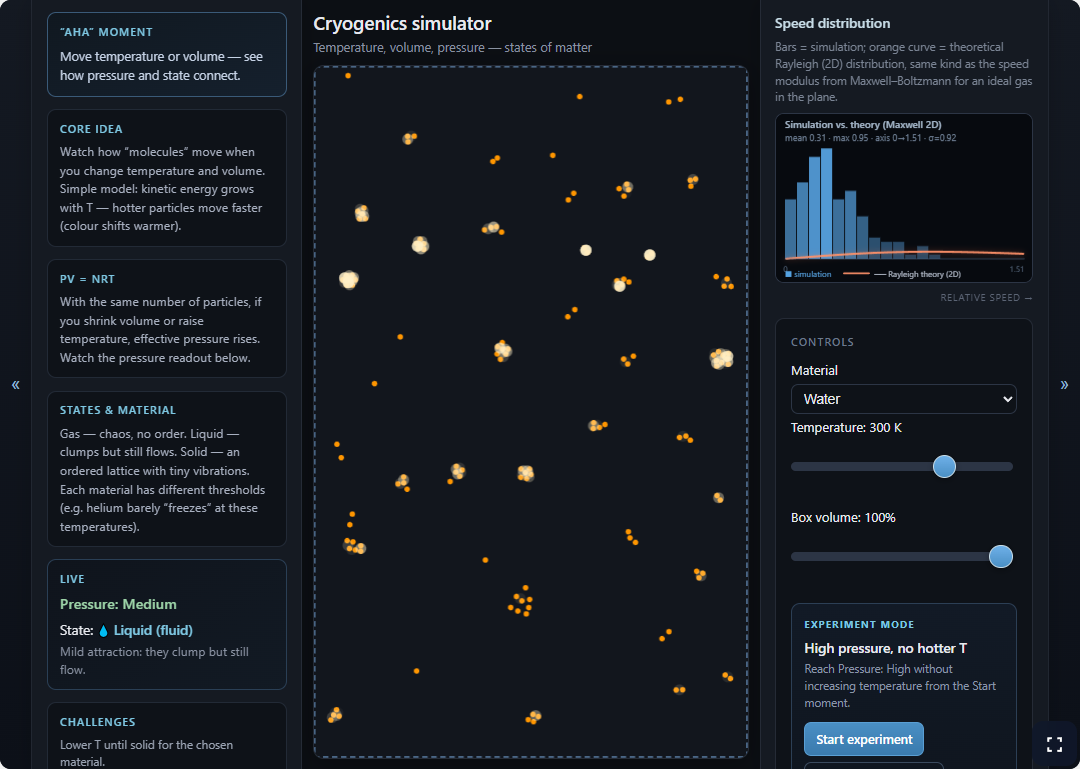
Superconductivity and the Meissner Effect
Simulate the T < Tc condition, magnetic levitation, and the transition back to the normal state when the temperature exceeds the critical temperature.
Electromagnetism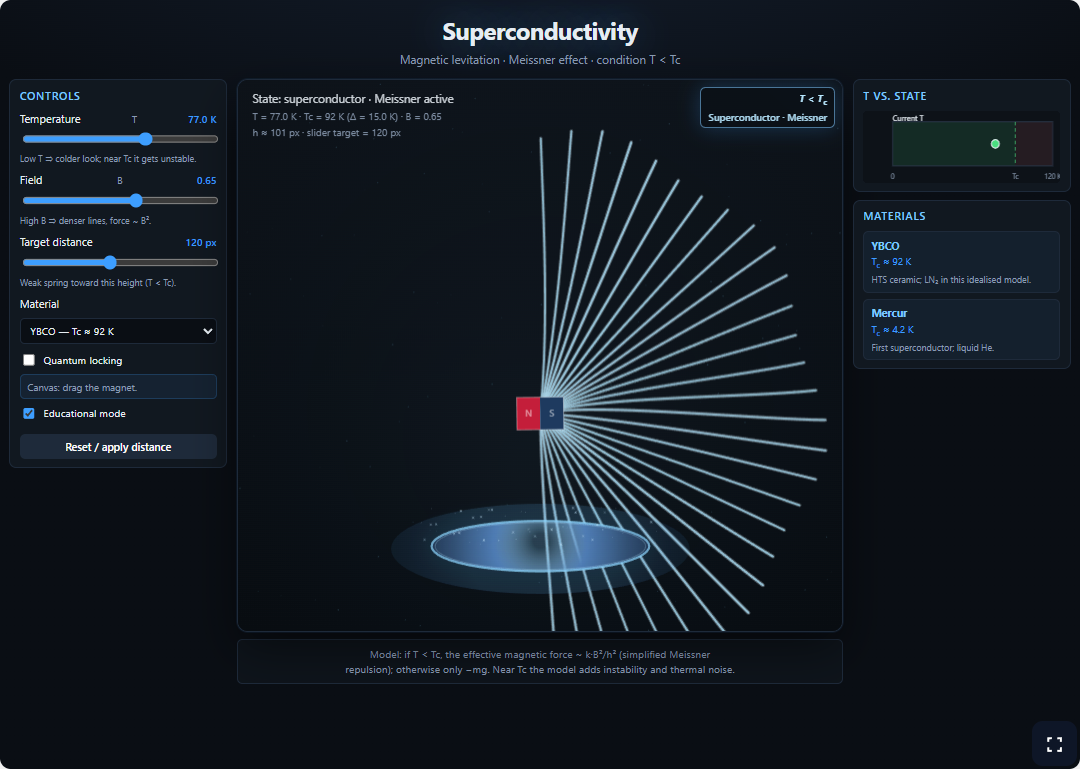
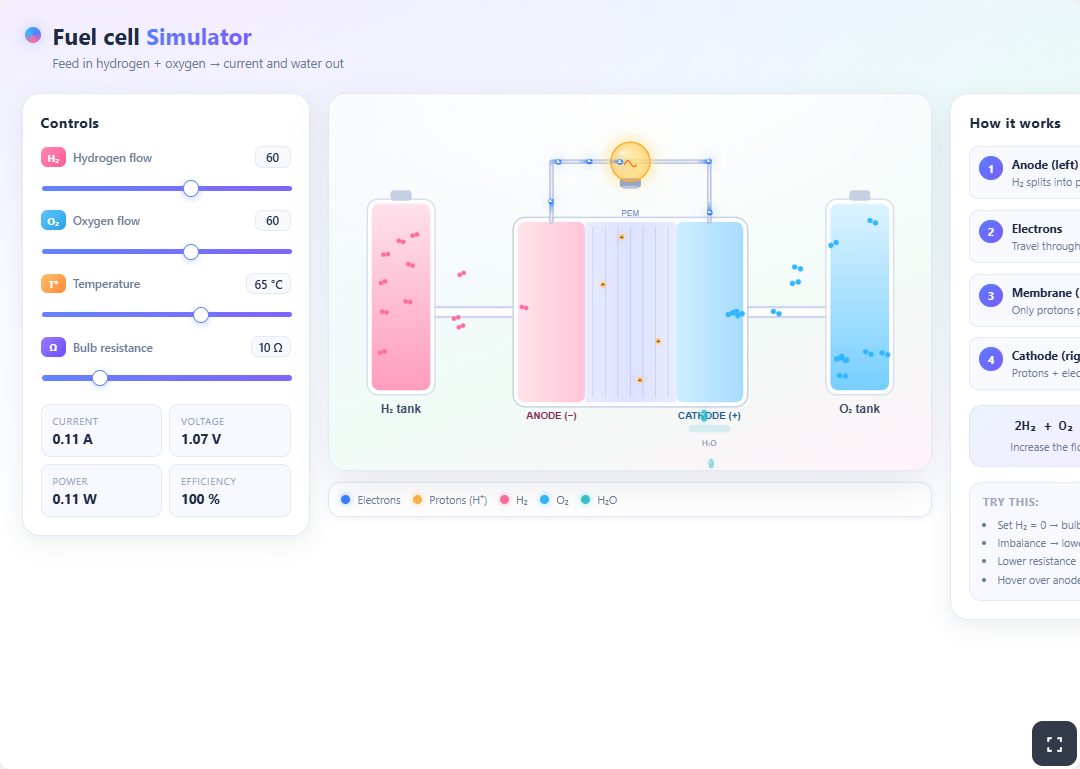
PEM Fuel Cell
Educational simulation: H2 and O2 feed the cell, electrons travel through the external circuit, protons cross the membrane, and voltage, current, power, and efficiency vary with flow rate and load.
Electromagnetism